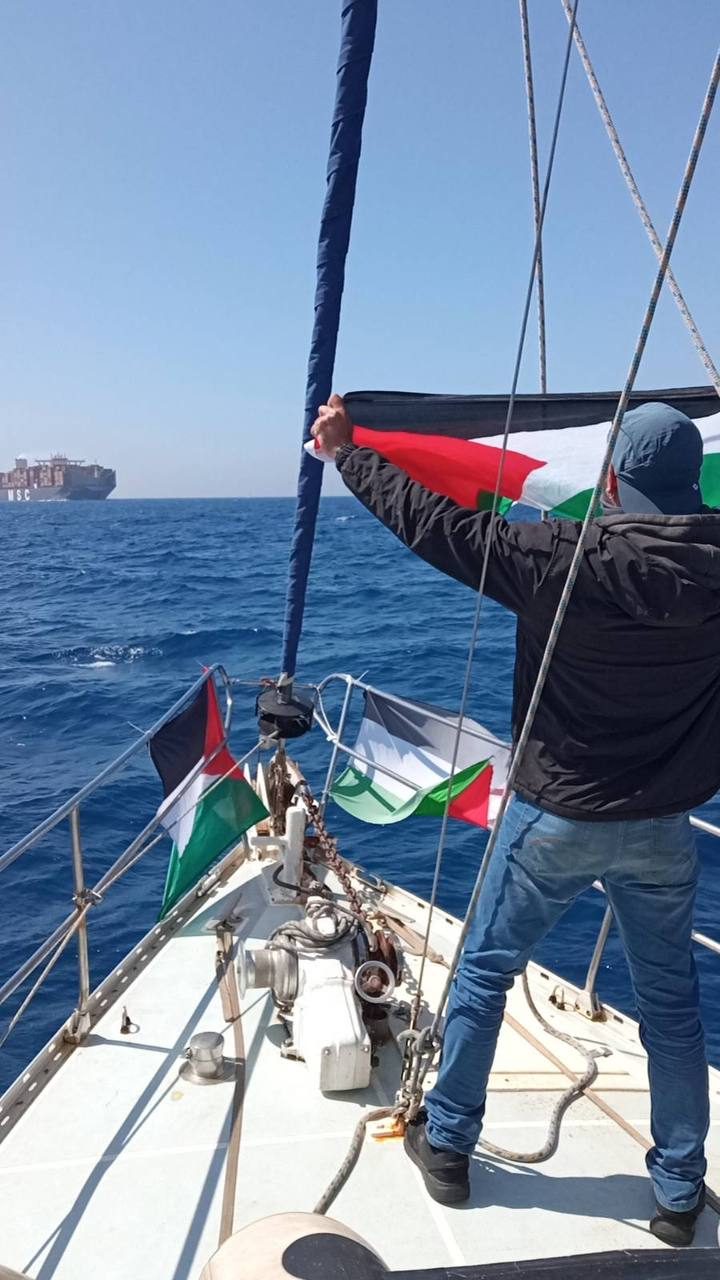
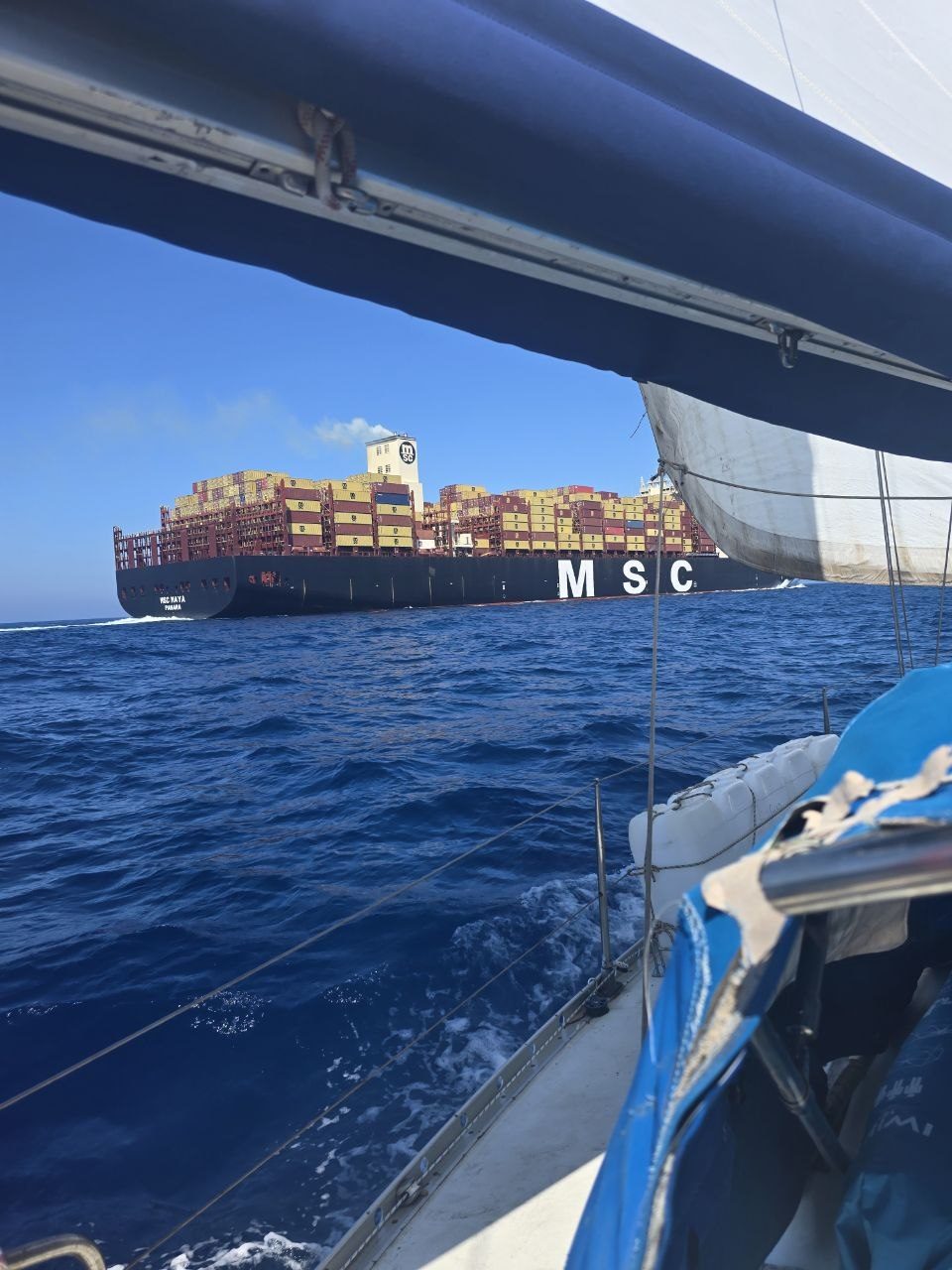
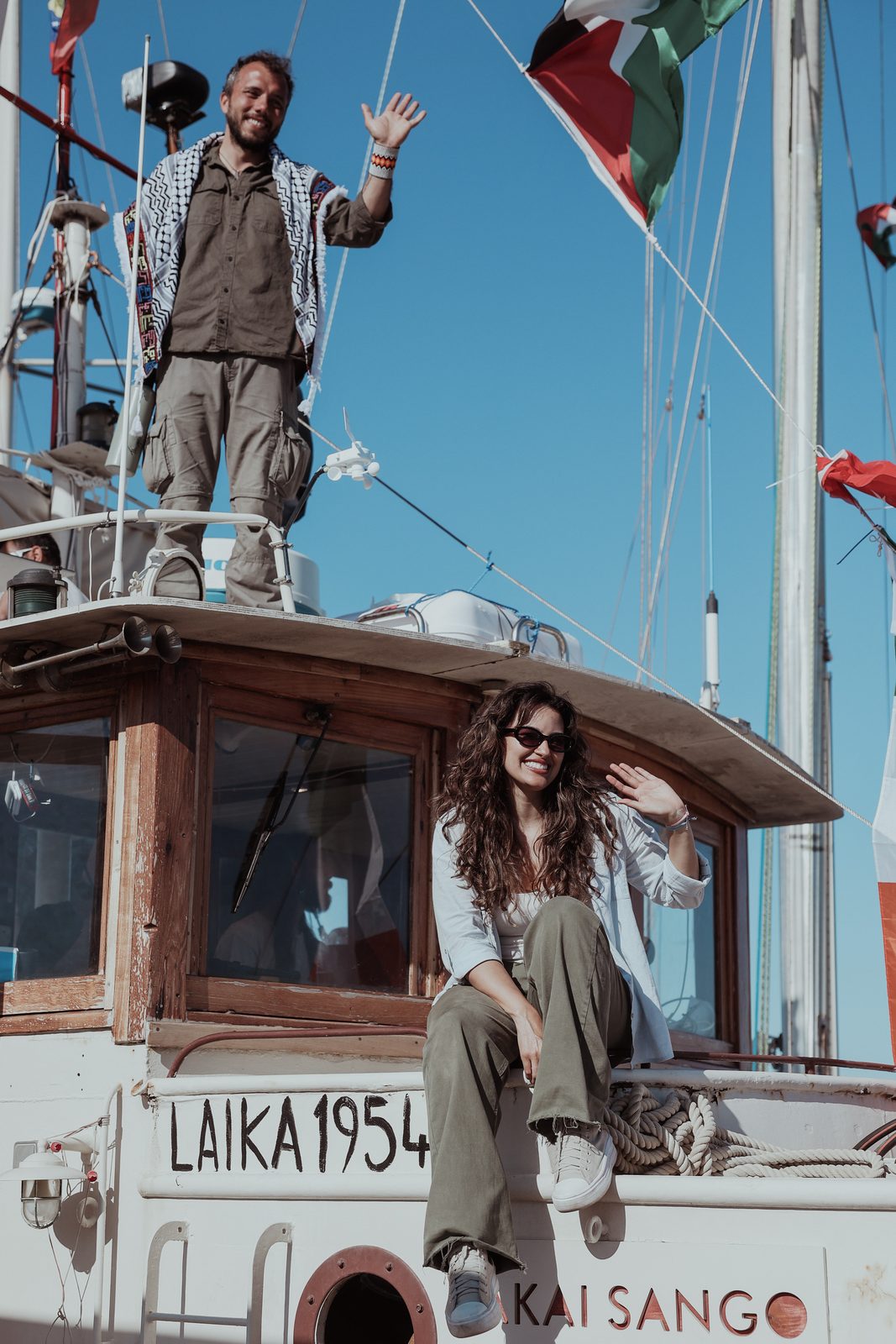
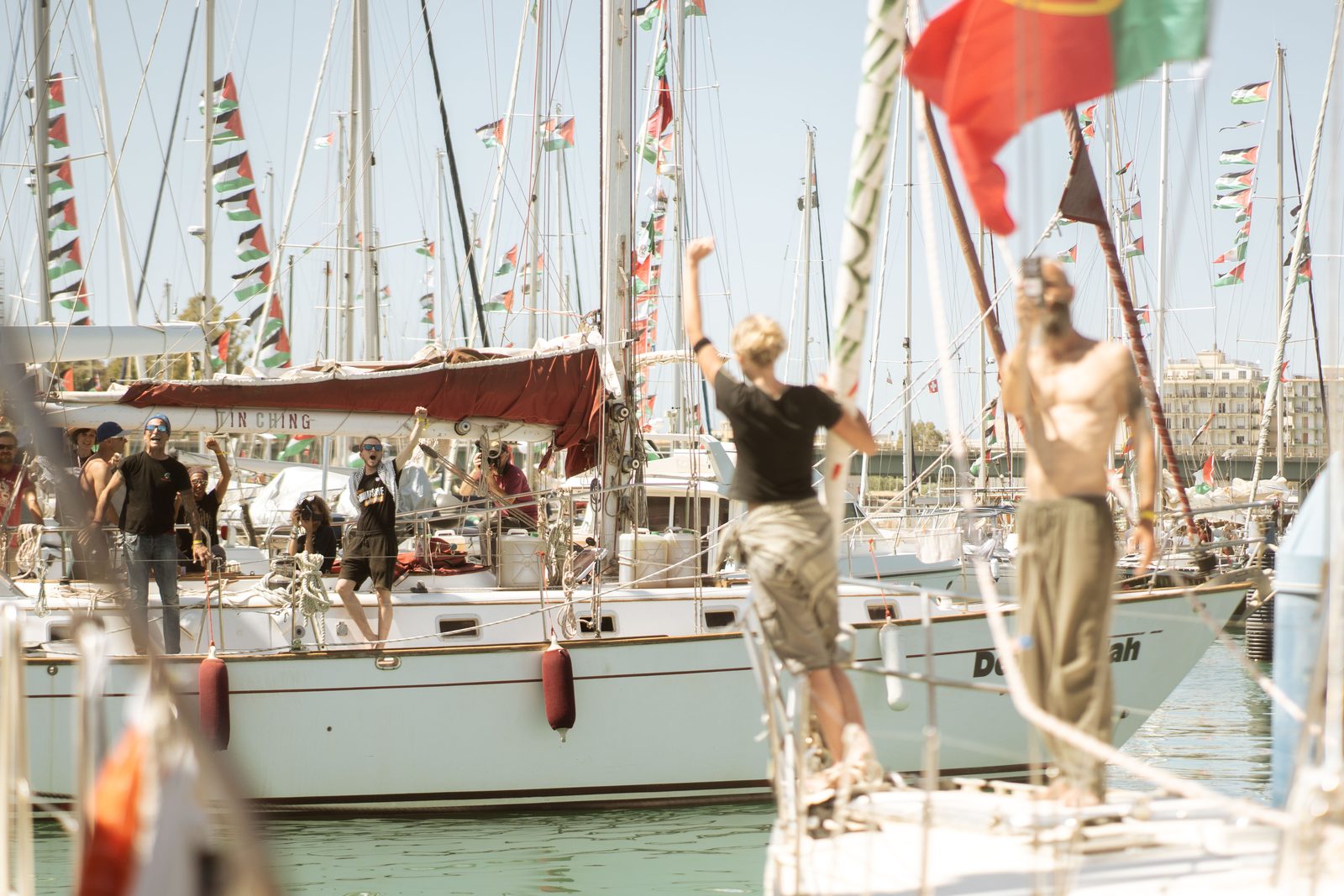
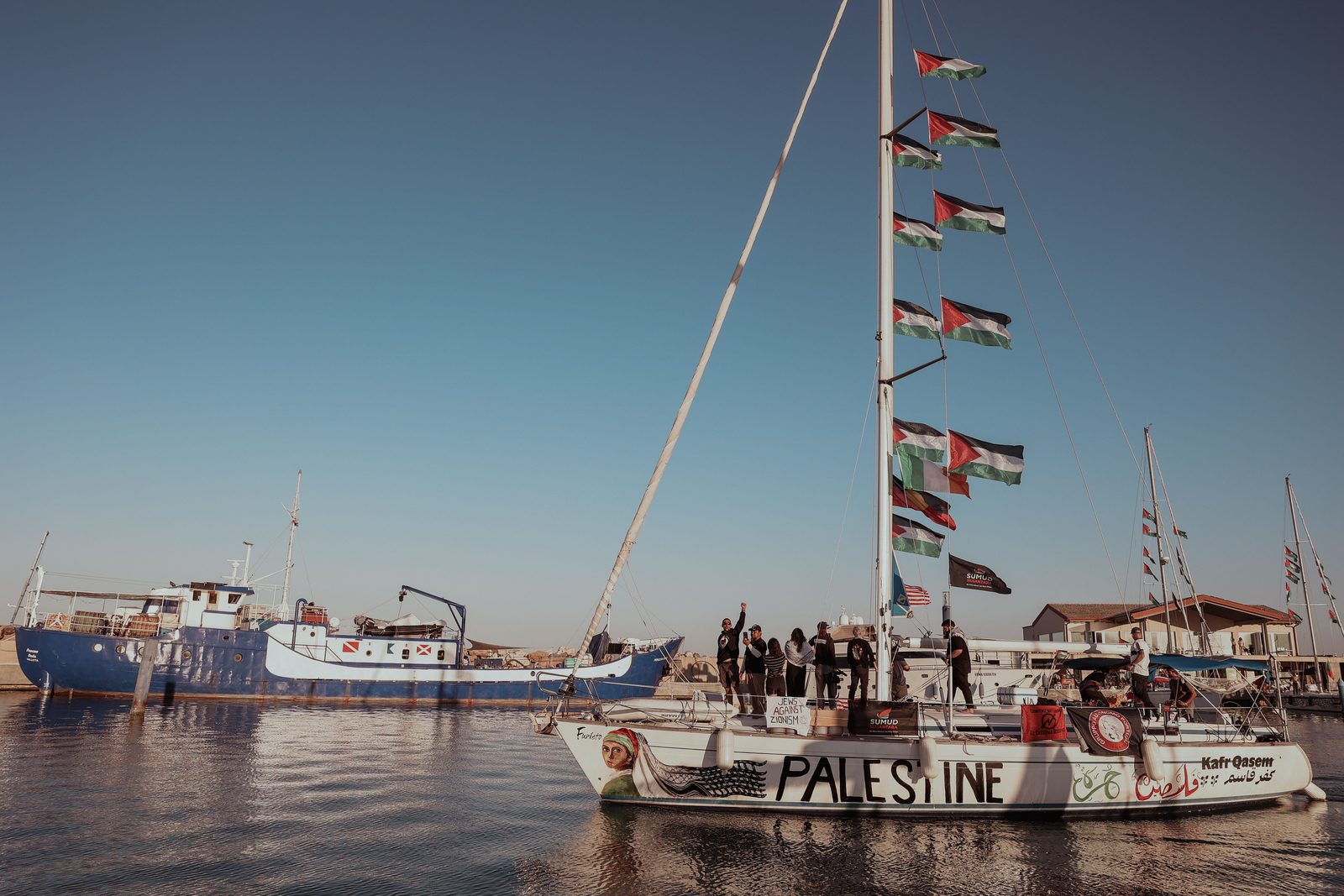
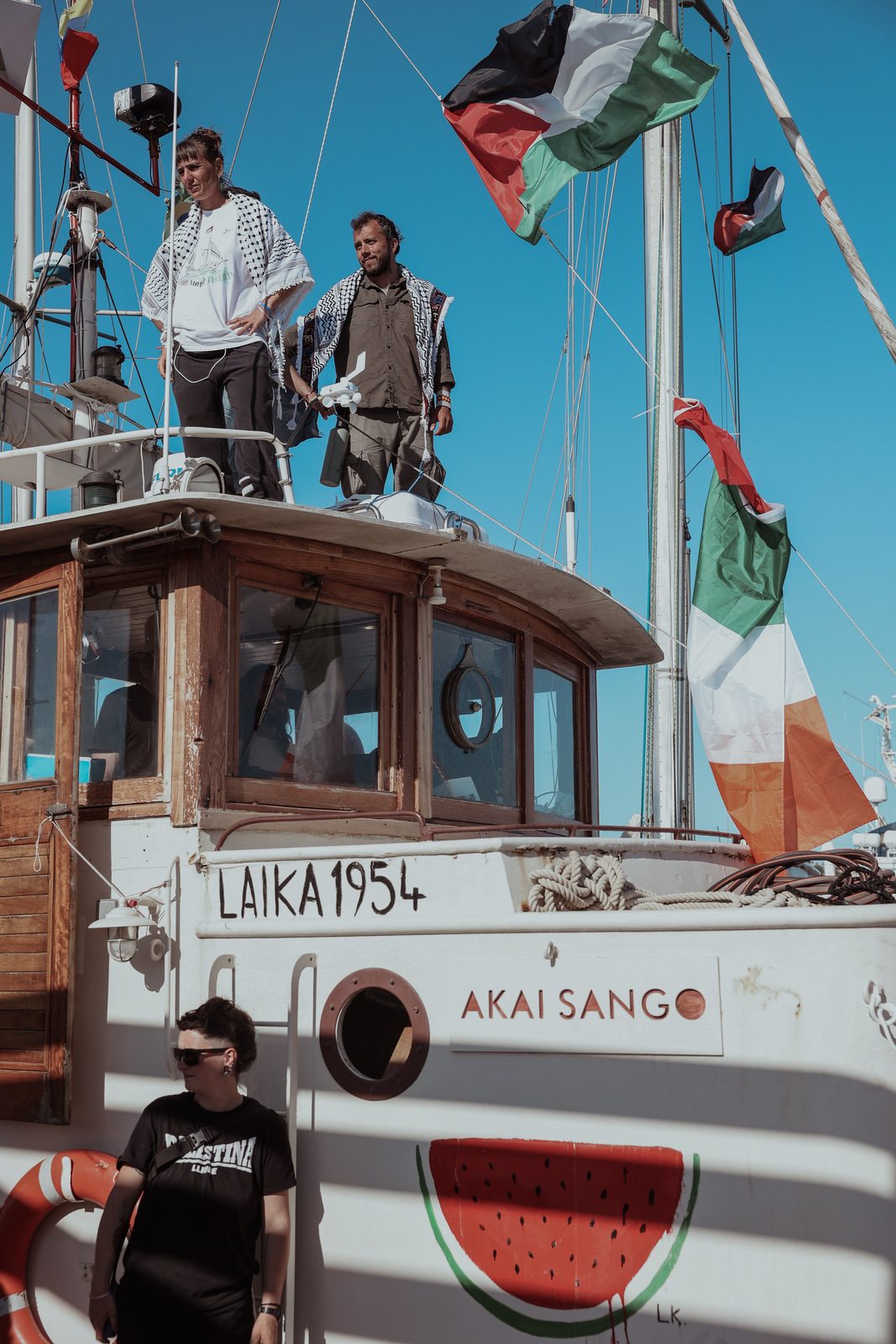
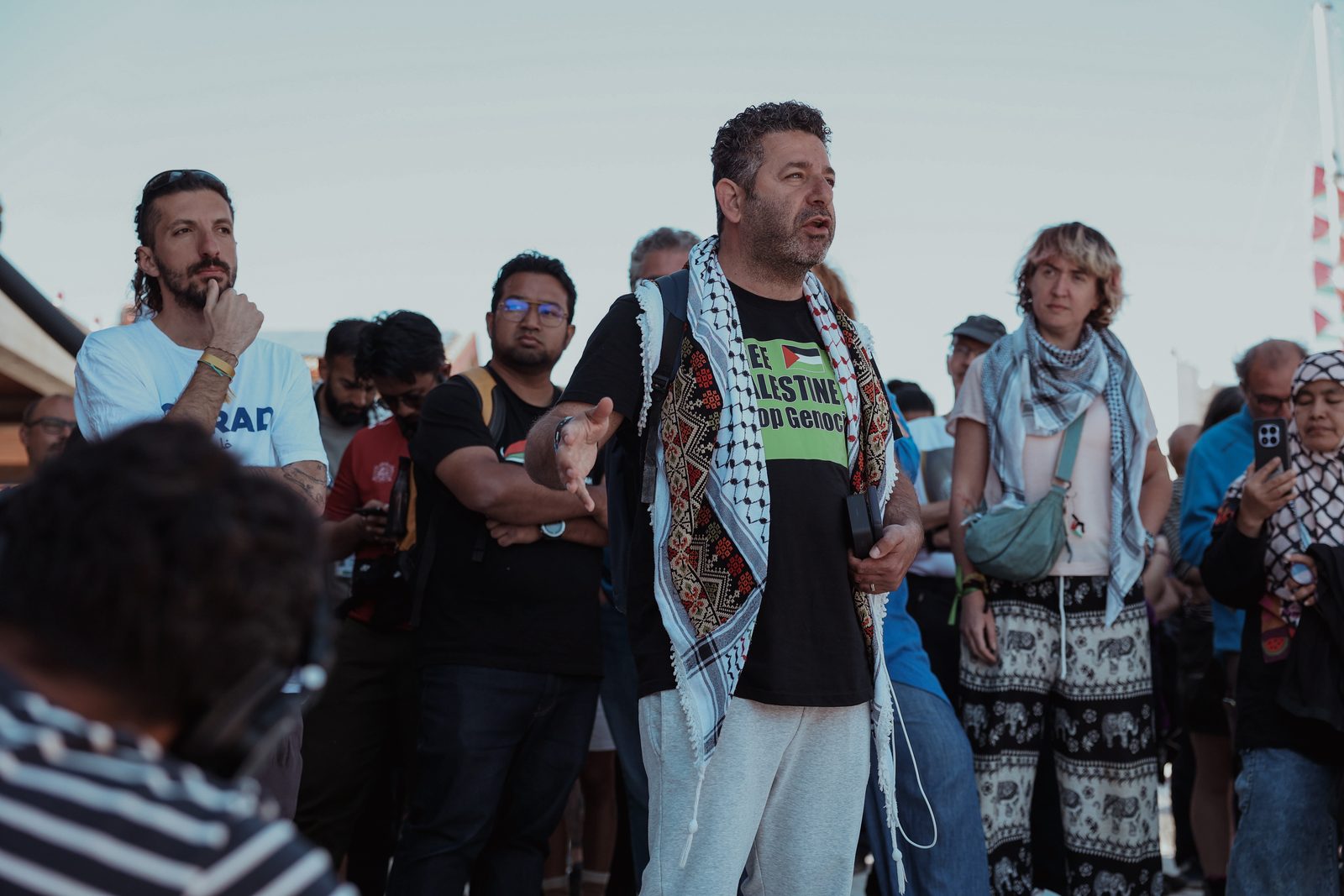
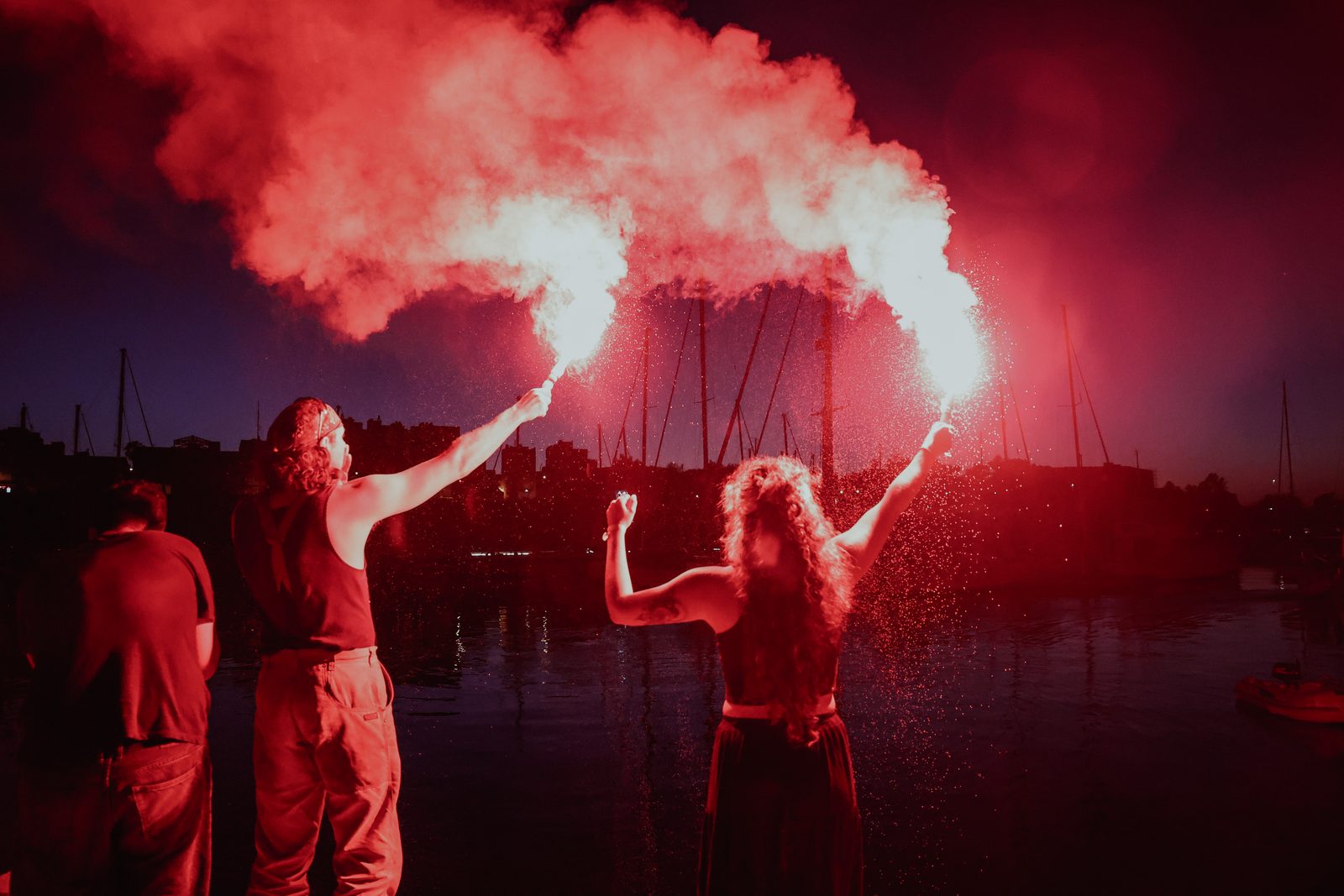
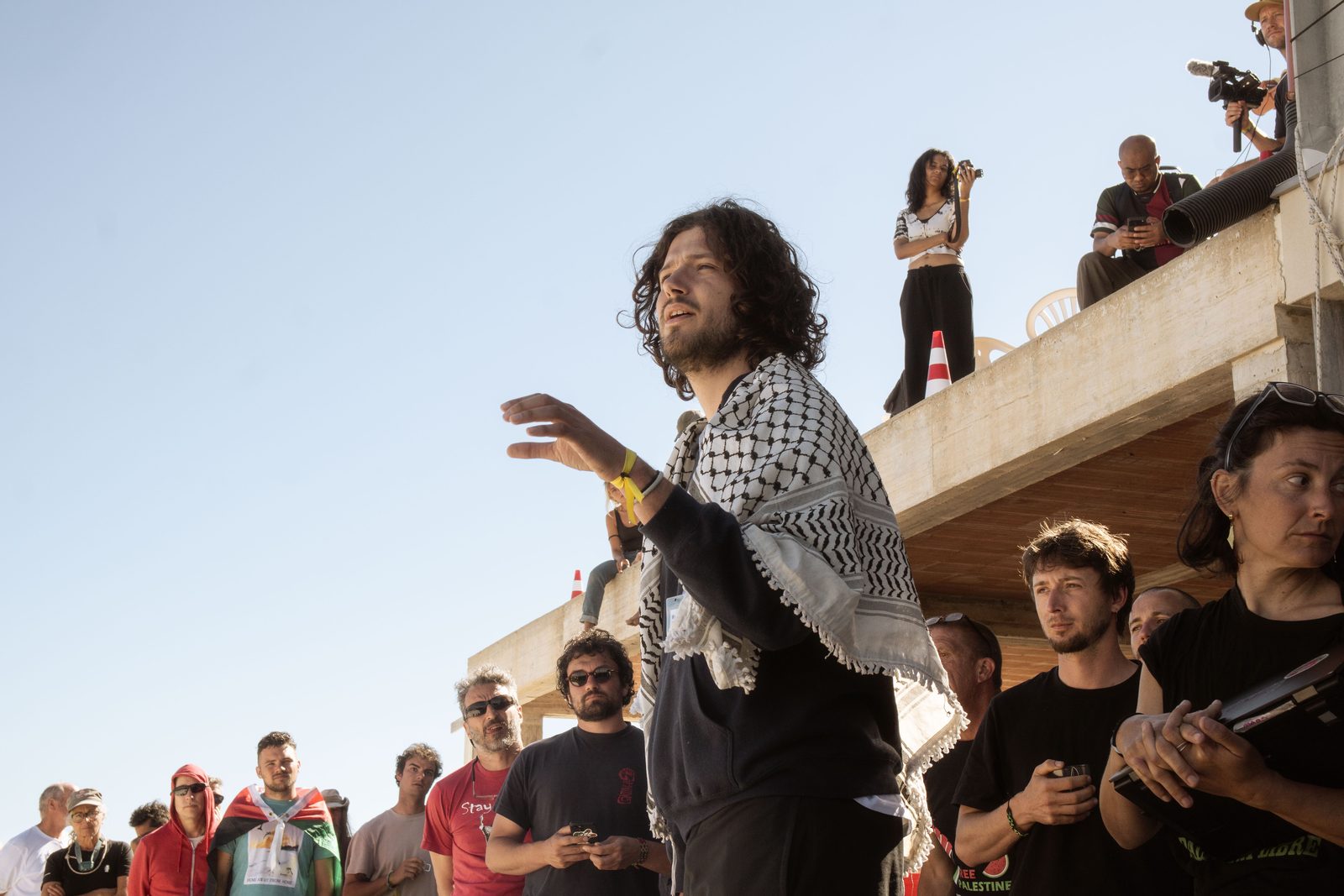
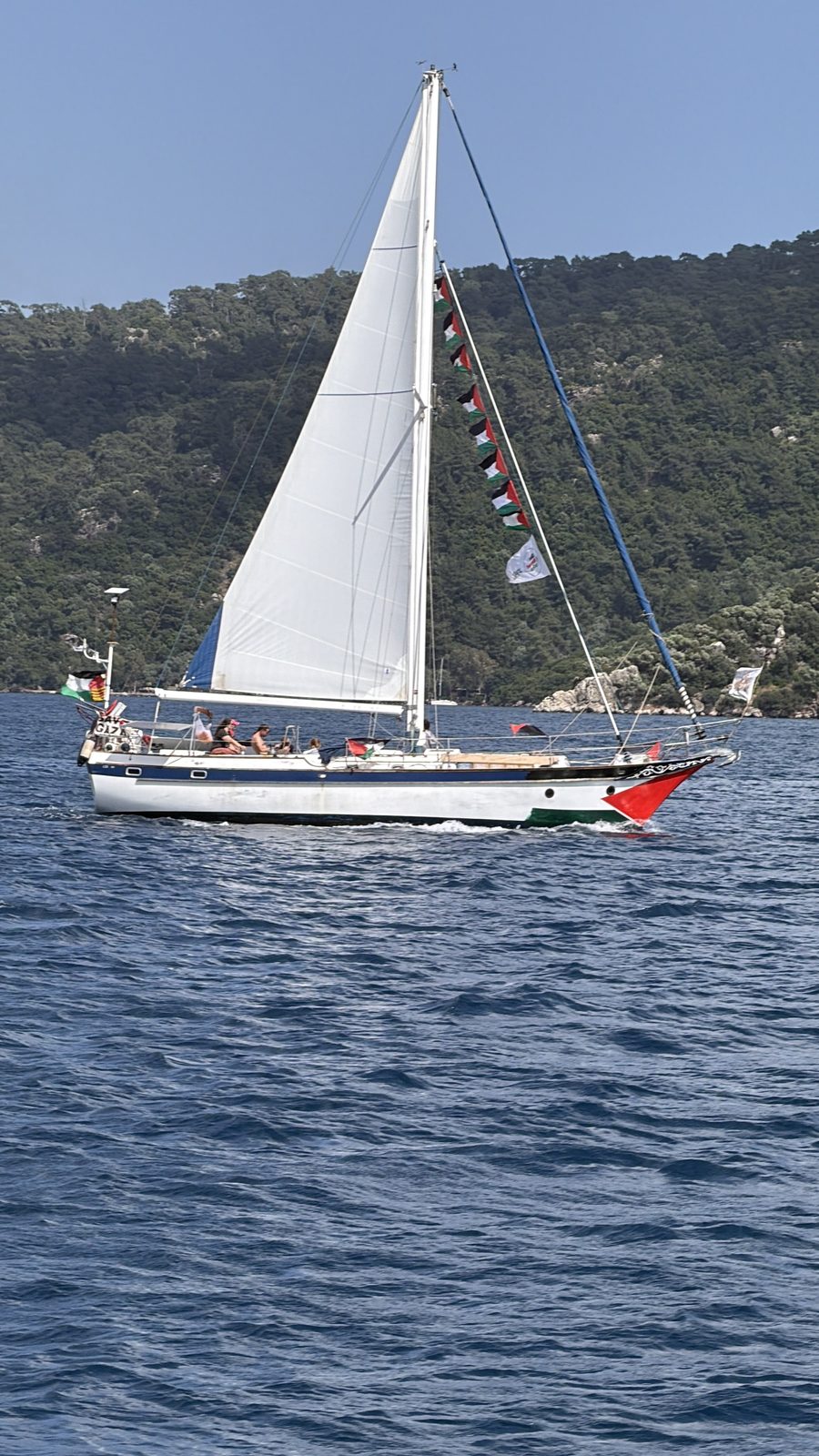
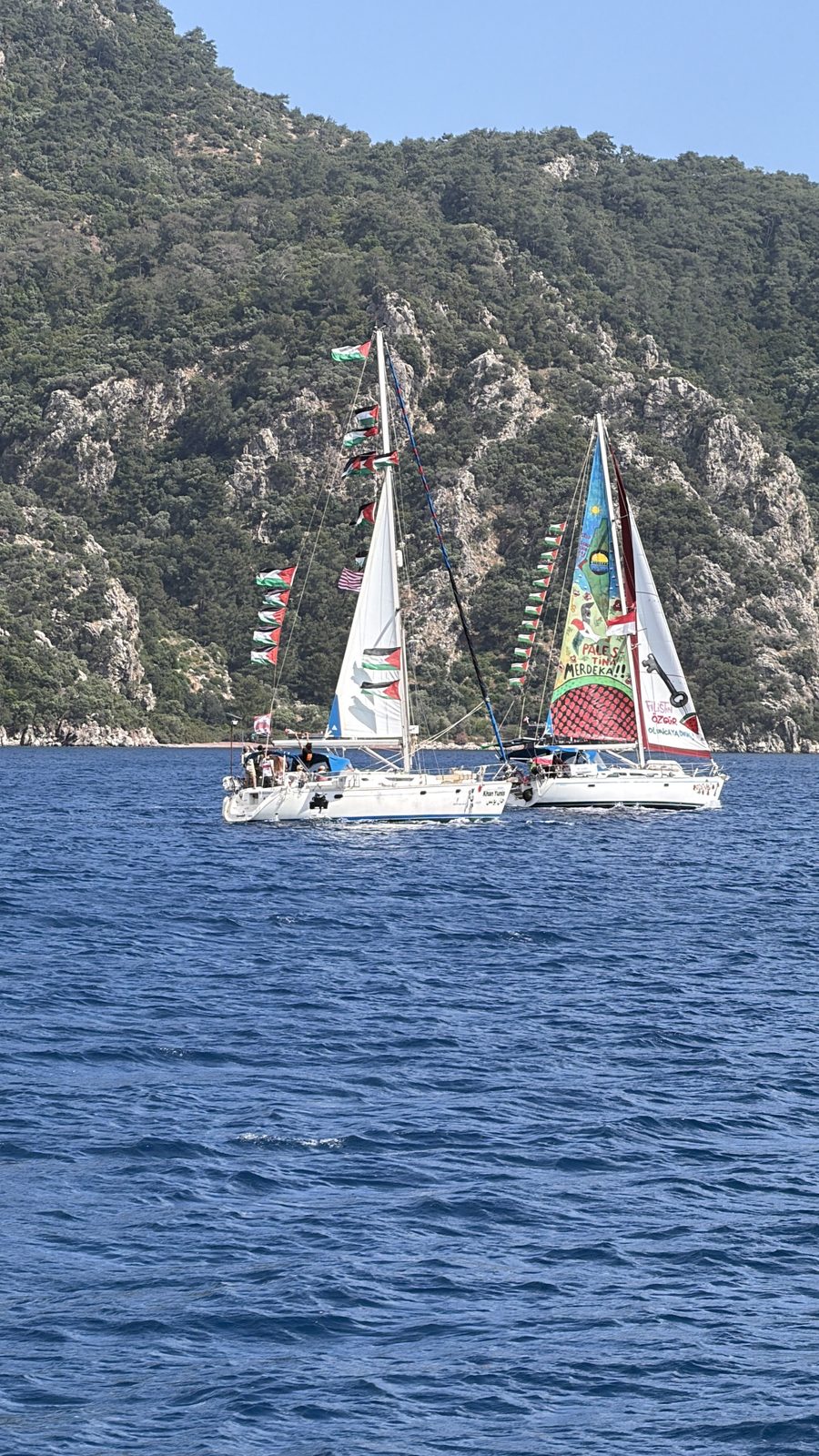
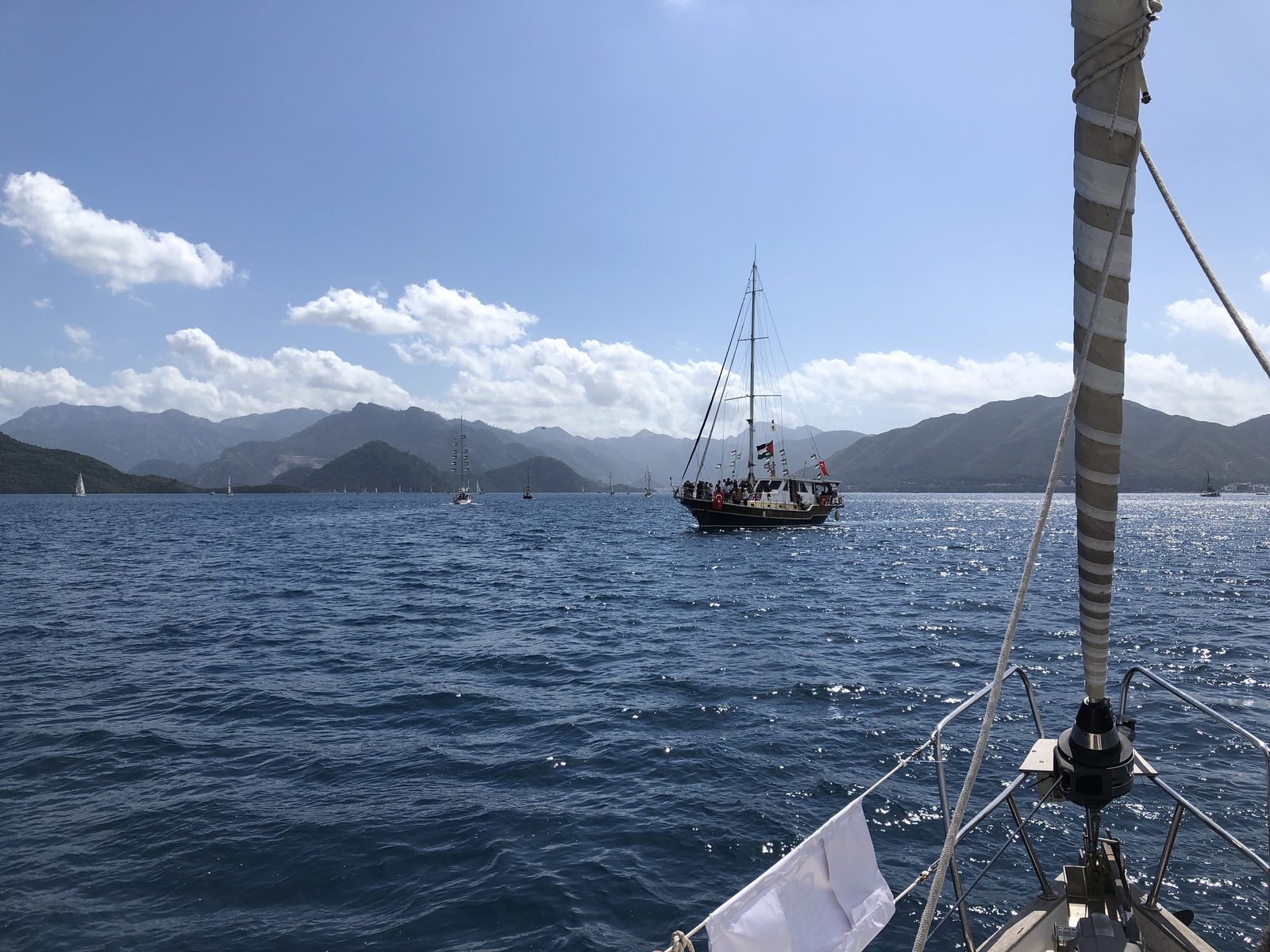
In the morning of 18 May, four days after lifting anchor from Marmaris, the Global Sumud Flotilla was in international waters within the Cypriot Search and Rescue zone, 250 nautical miles from Gaza, when four iOF military vessels emerged on the horizon and began closing in from all directions.
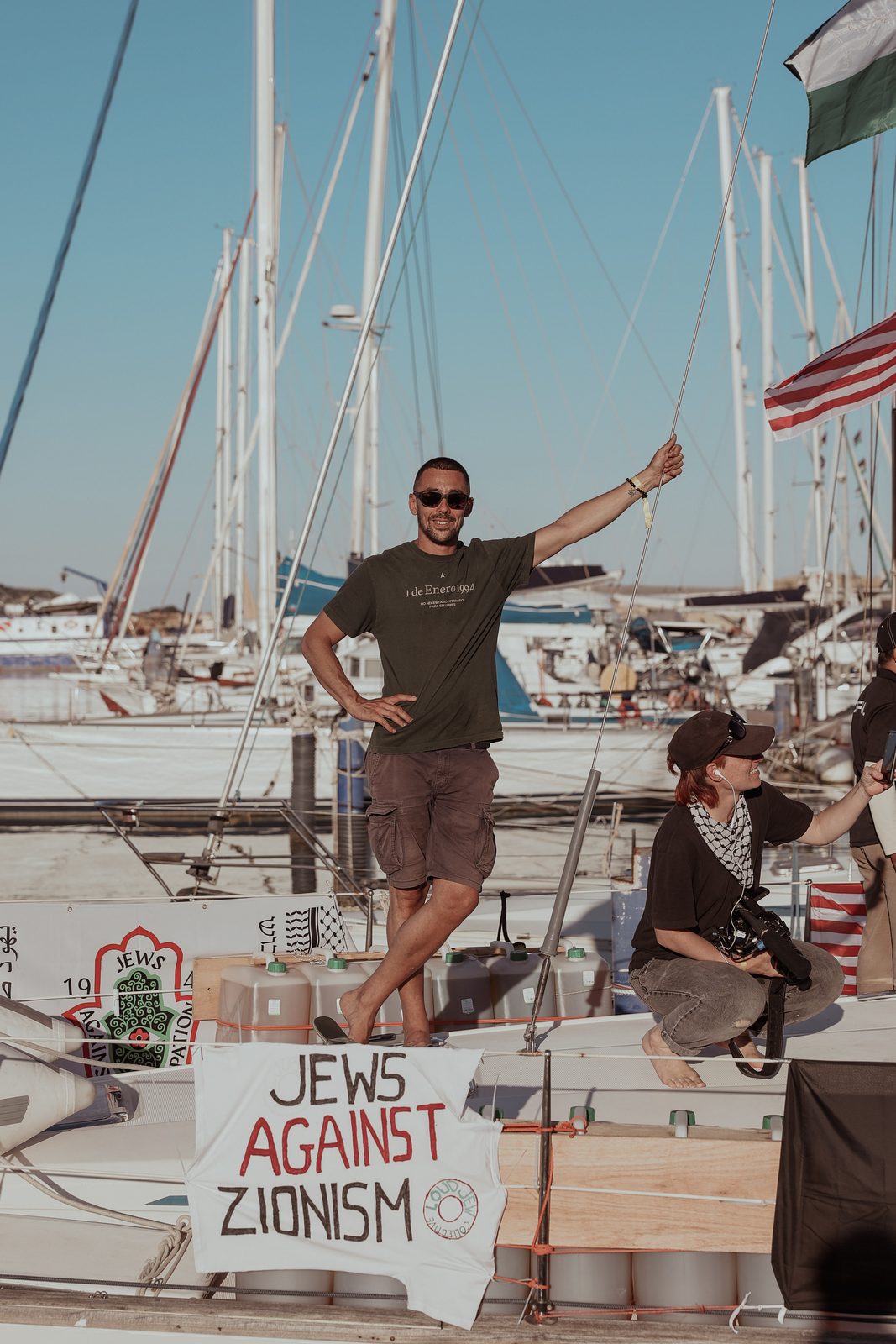
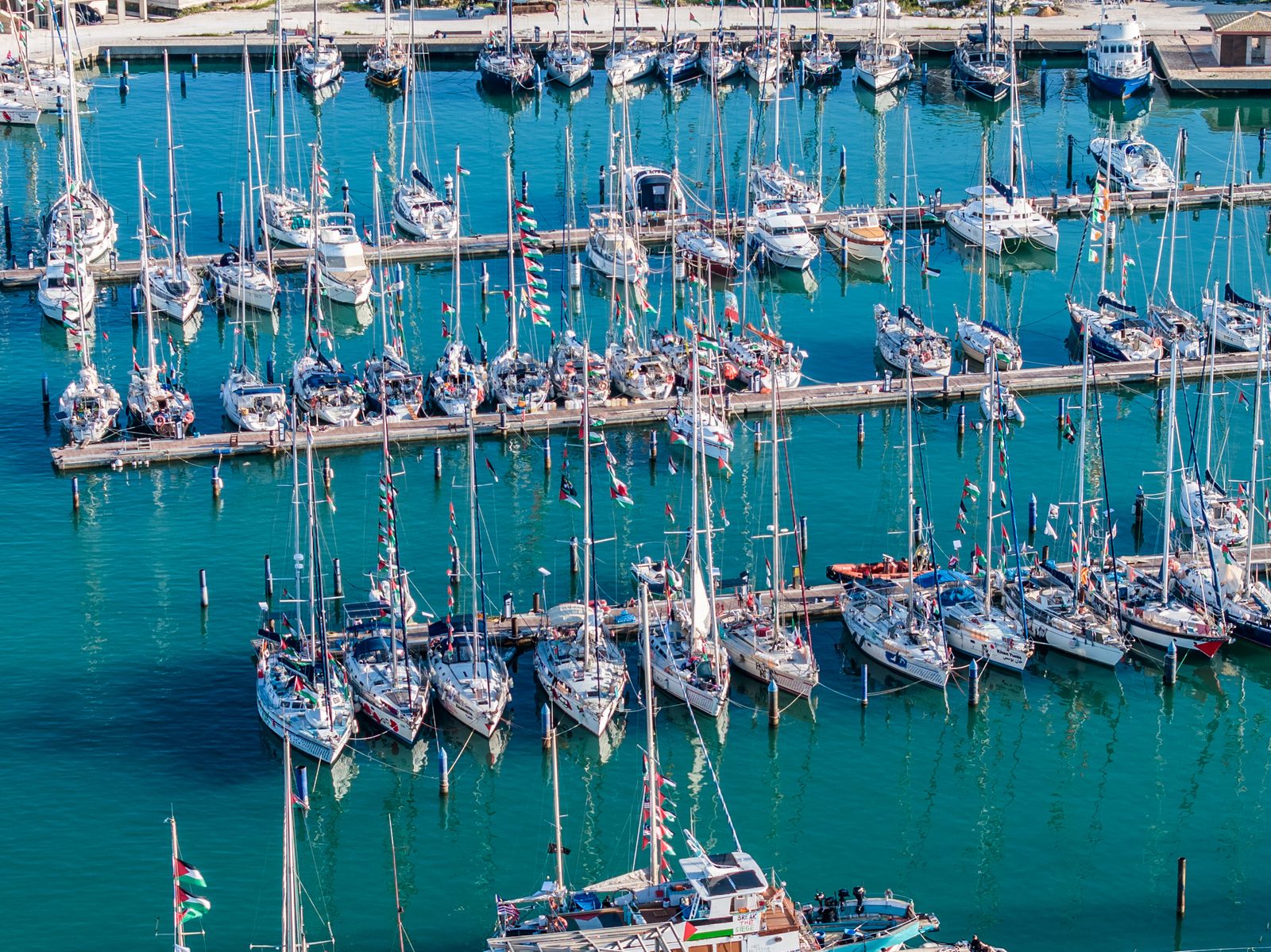
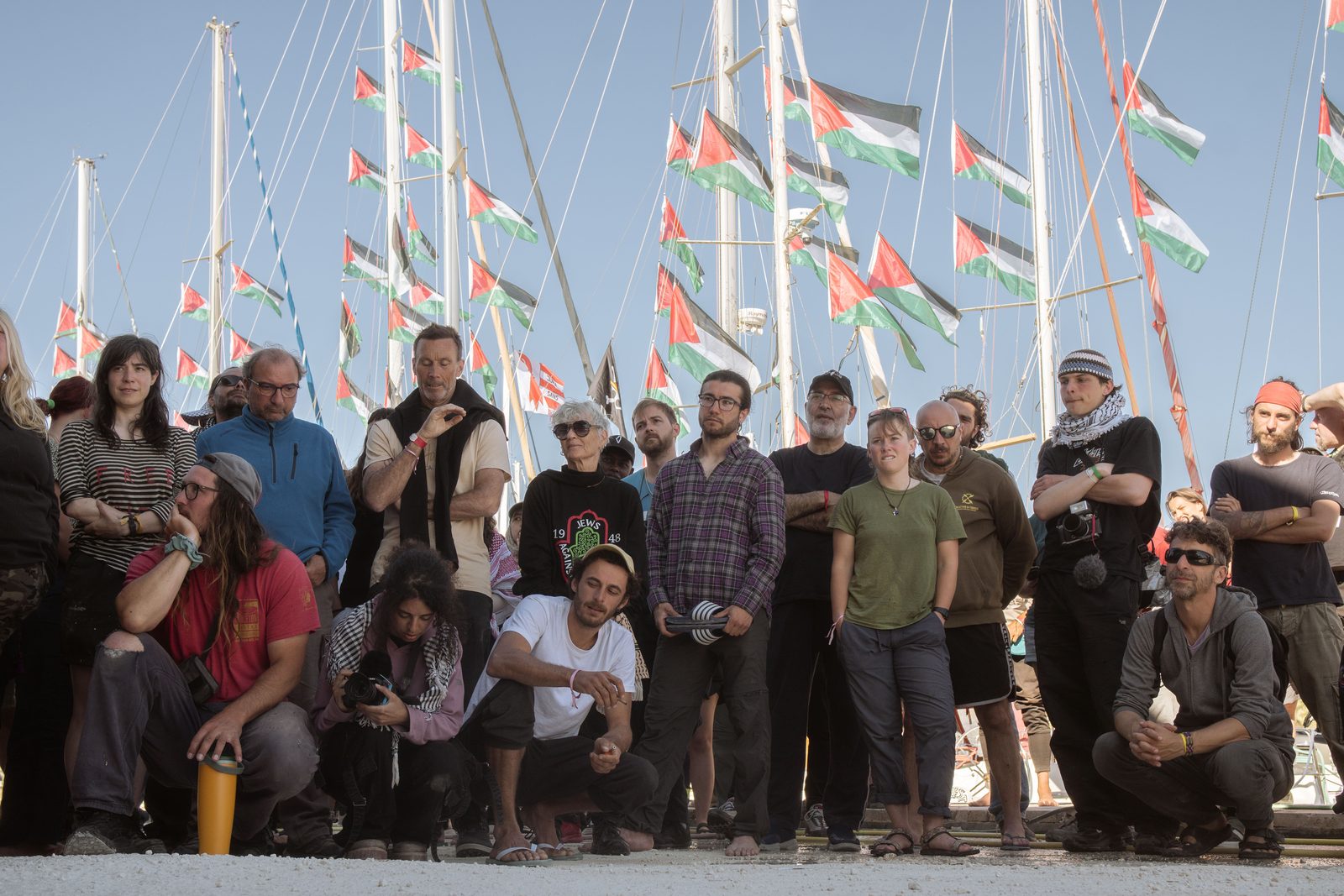
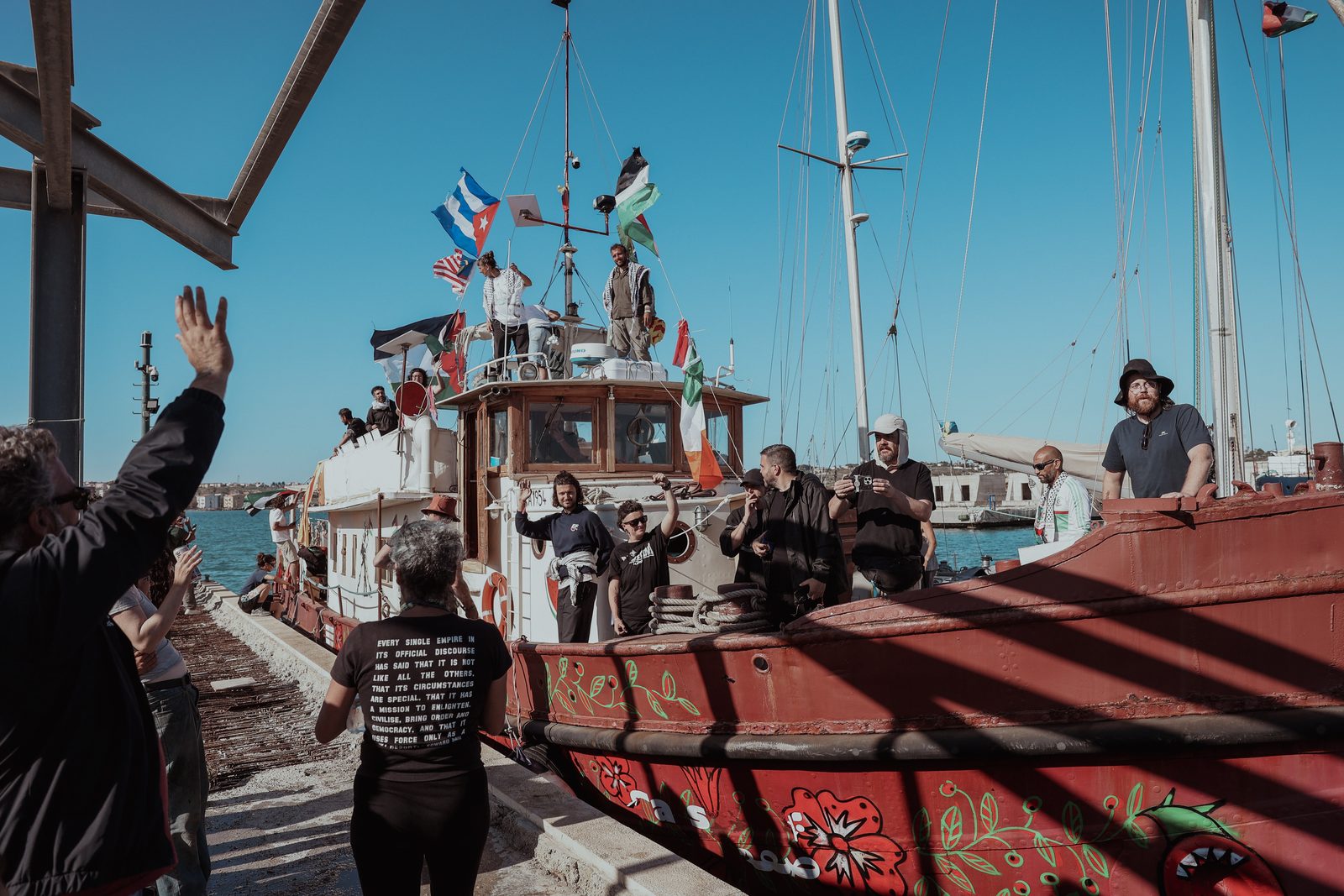
Among them was the Nahshon, the same prison ship that had carried nearly two hundred abducted participants twenty days earlier. Sailing in formation alongside GSF and the Freedom Flotilla Coalition were 50 boats, mostly small sailing vessels, carrying 429 participants from 44 countries.
The violence escalated through both days. At least six boats, including Kyriakos, Munki, Alcyone, Elengi, Zefiro, and Girolama, were fired upon with what is now believed to be either rubber bullets or bean bag rounds. Girolama, after pleading "Why are you shooting? We are unarmed," was struck with bullets hitting the rails and life ring while participants ducked face-down on the deck.
On the evening of 19 May, the Sirius was rammed by an iOF military vessel, vessel number A833D, after being soaked with water cannons. Footage shows the iOF vessel using its wake to try to stop the Sirius, then approaching directly and striking the boom and bow. The collision was confirmed on camera.
The iOF did not just intercept. It sabotaged. Search and rescue operations by non-intercepted vessels Wave Song and Kasr Sadabad found the abandoned boats deliberately destroyed: sails ripped, water supplies tampered with, lower decks intentionally flooded with seawater. The Kyriakos sank. Amanda, Sadabad, and Furleto were found abandoned and destroyed.
By the evening of 18 May, 40 vessels had been confirmed intercepted within the Cypriot SAR zone. Cyprus did not respond. The Cypriot coast guard, like the Hellenic Coast Guard before it, declined to fulfil its legal obligations under the very Search and Rescue framework the interception had violated.
The remaining ten vessels continued sailing through the night, evading drones, GPS spoofing, and surveillance from a Royal Air Force radar drone operating out of RAF Akrotiri. On 19 May, the second day of the interception, the iOF caught the rest.
Ten more interceptions took place within the Egyptian Search and Rescue zone on 19 May. Egypt did not respond either.
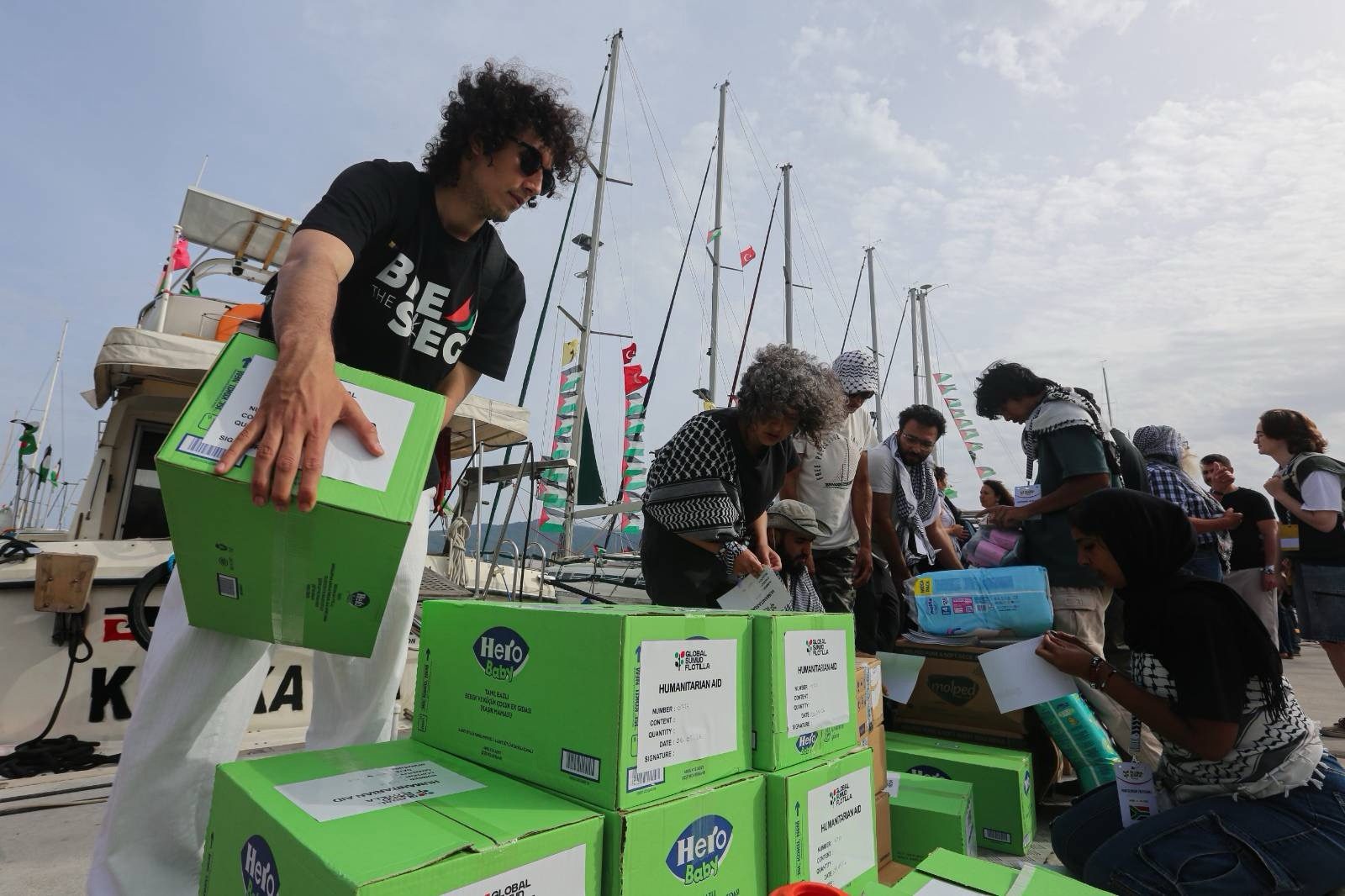
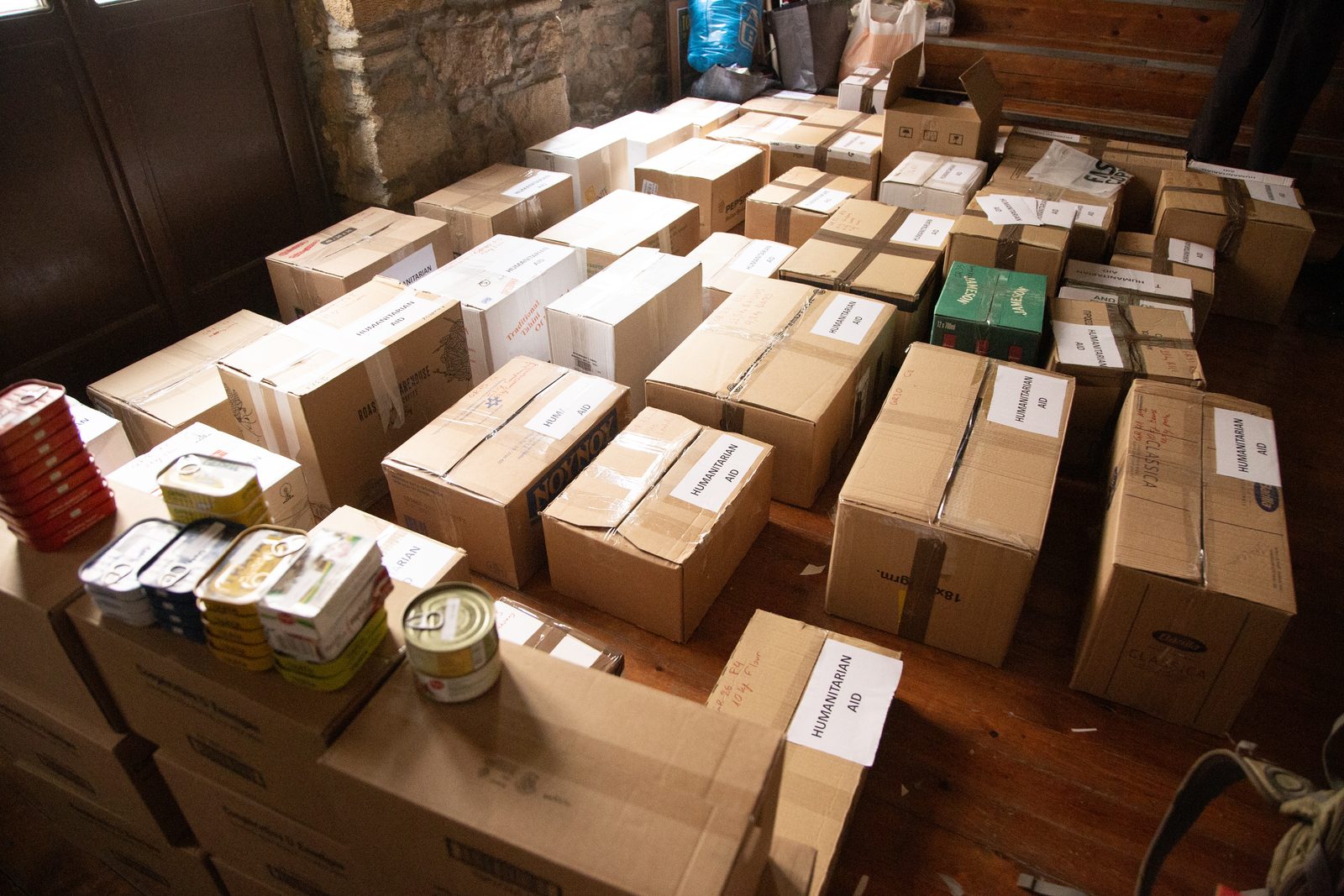
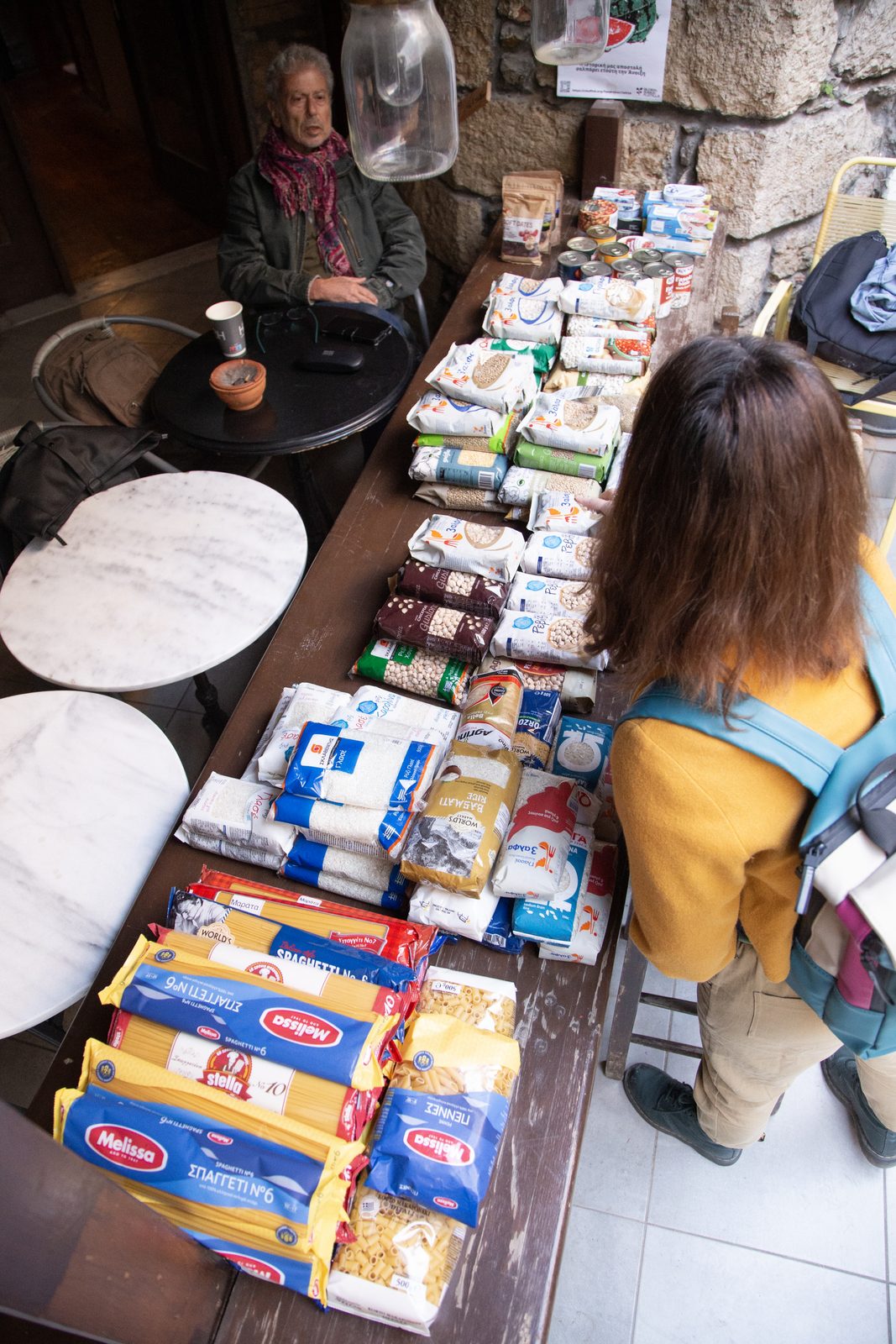
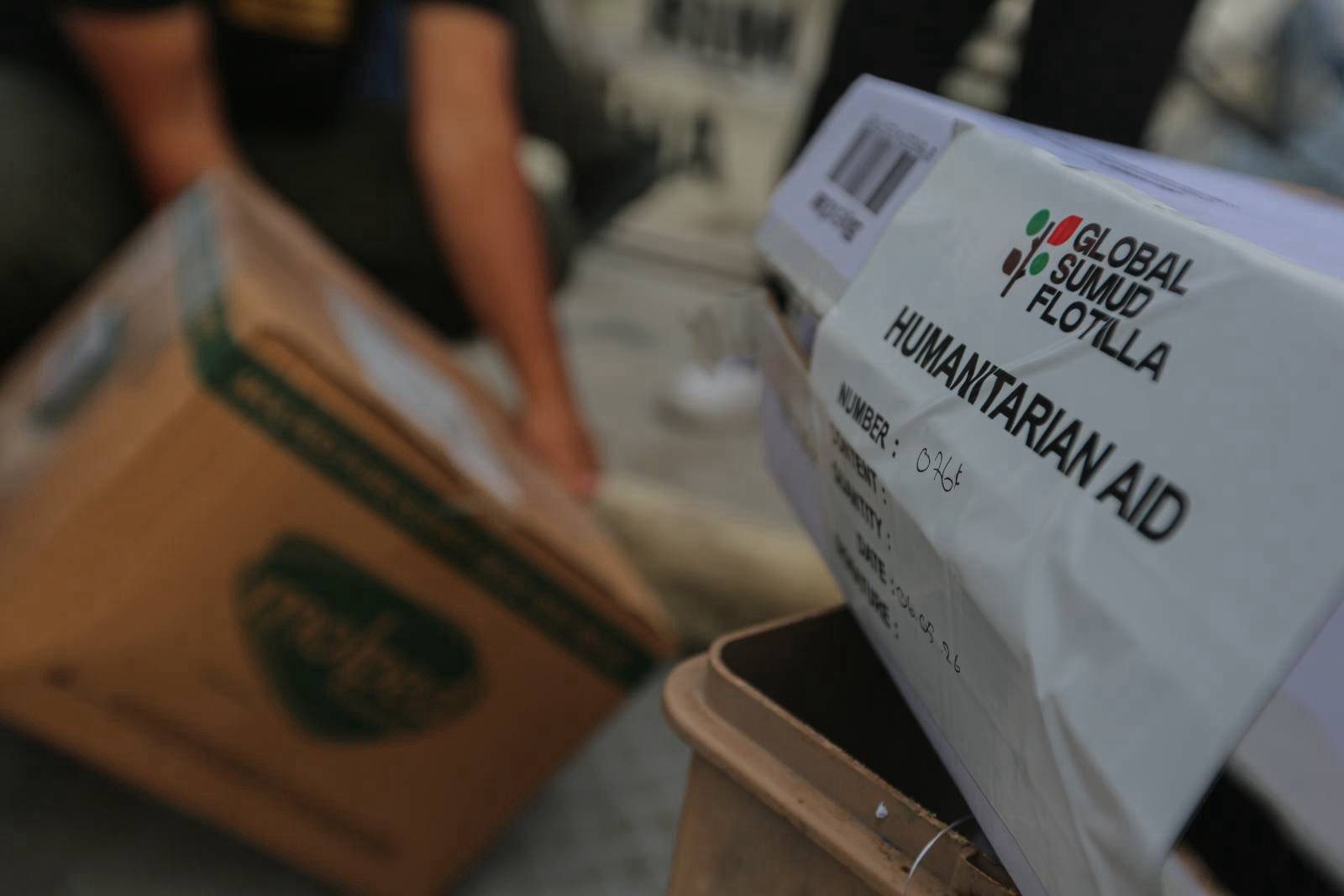
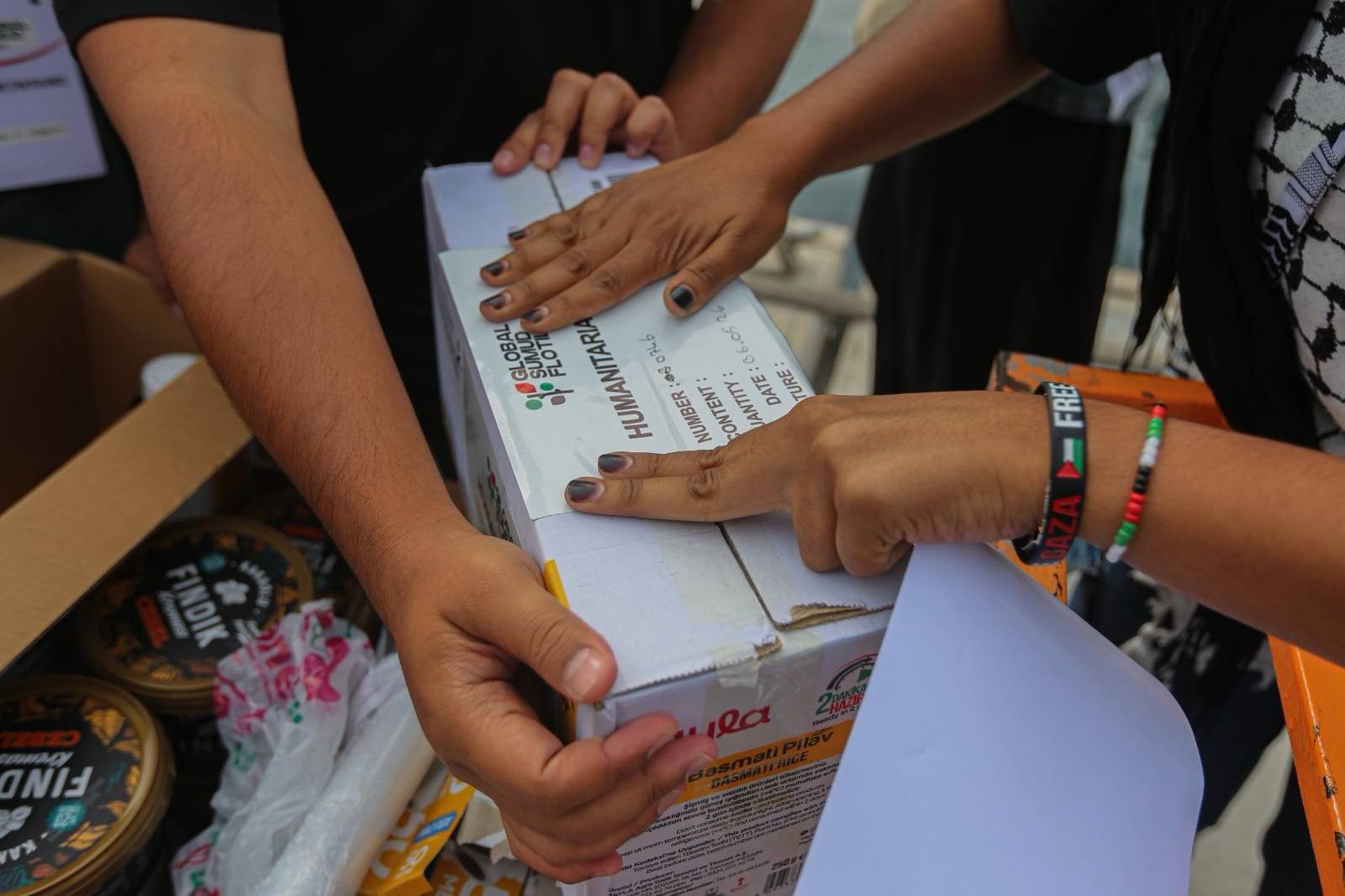
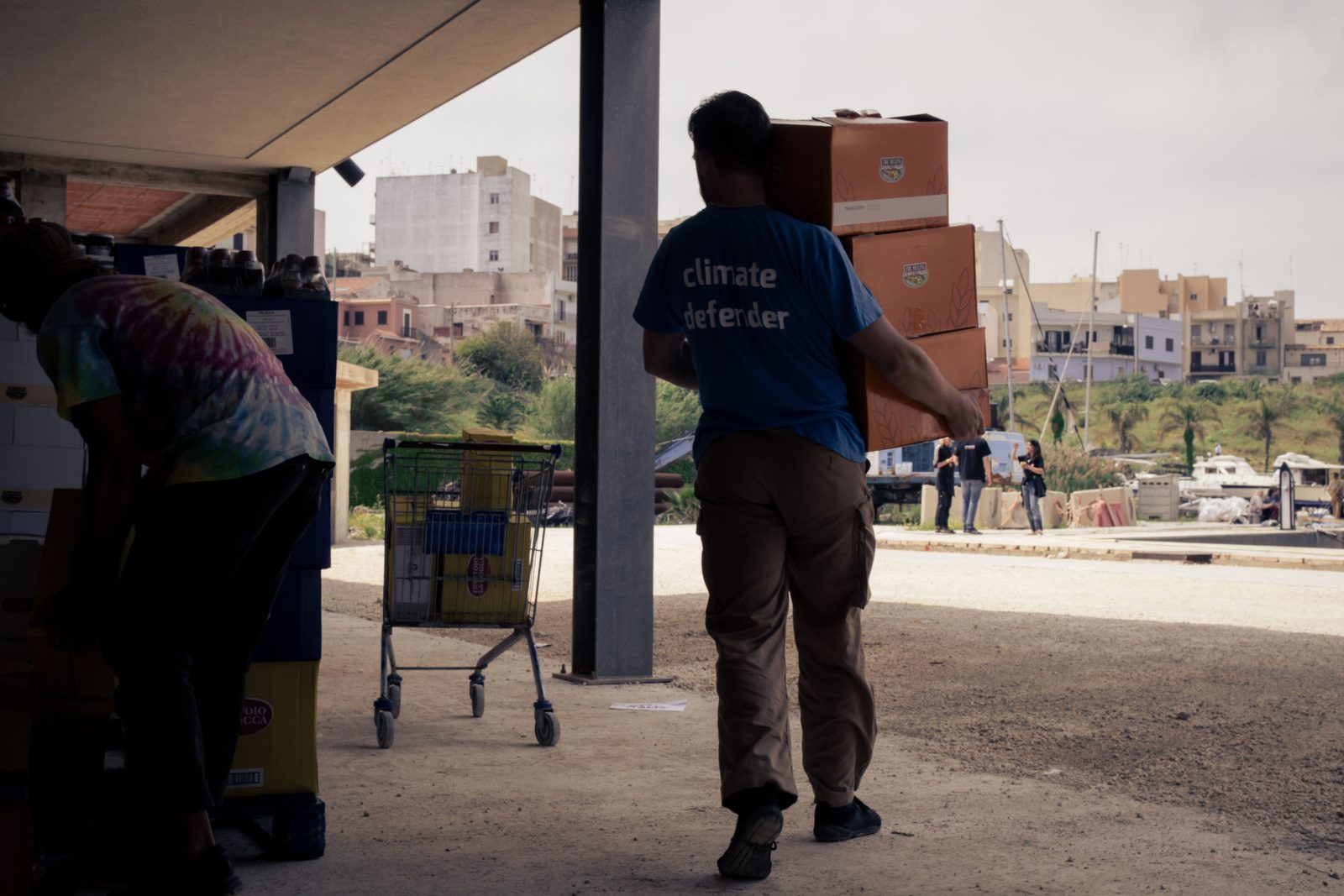
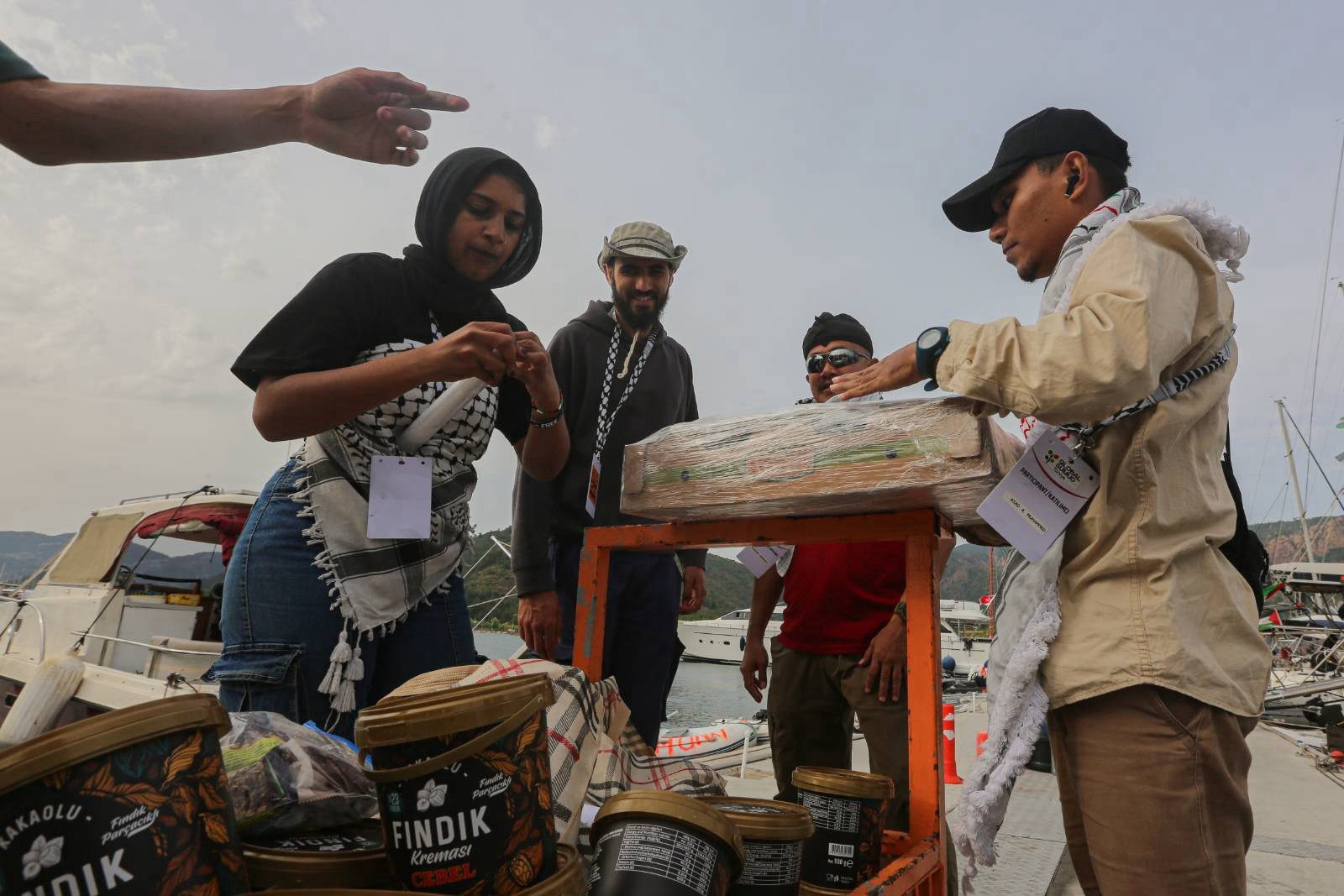
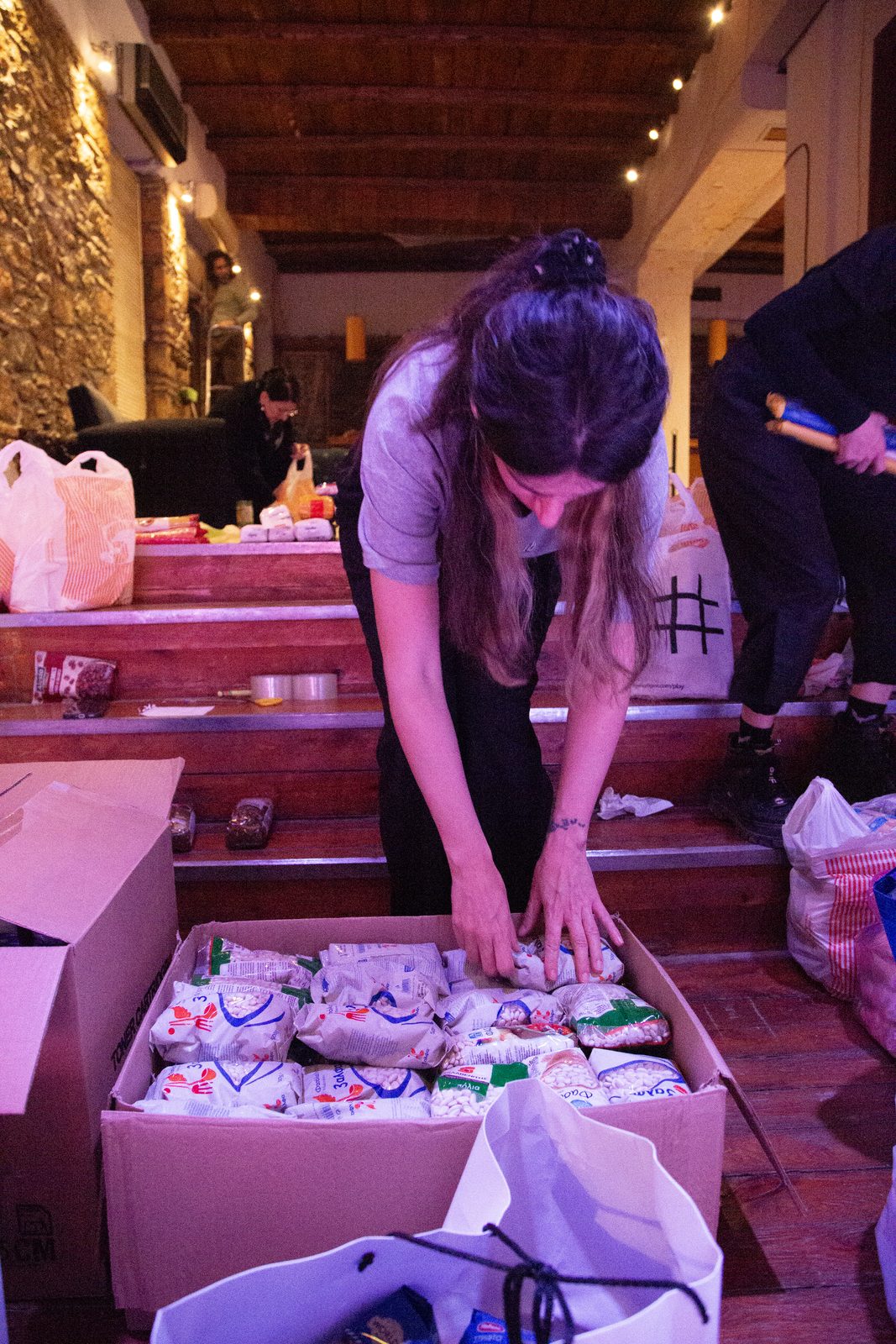
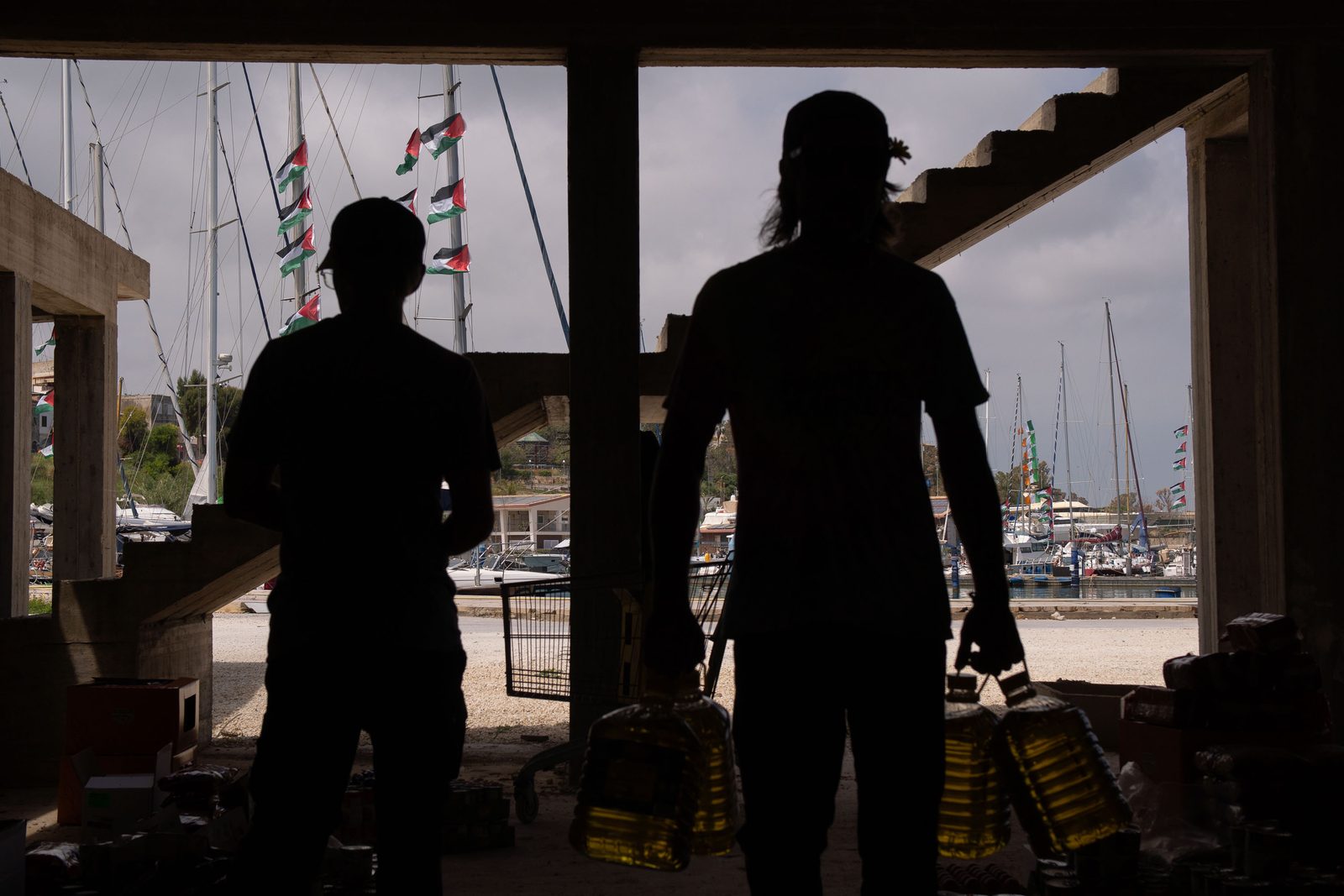
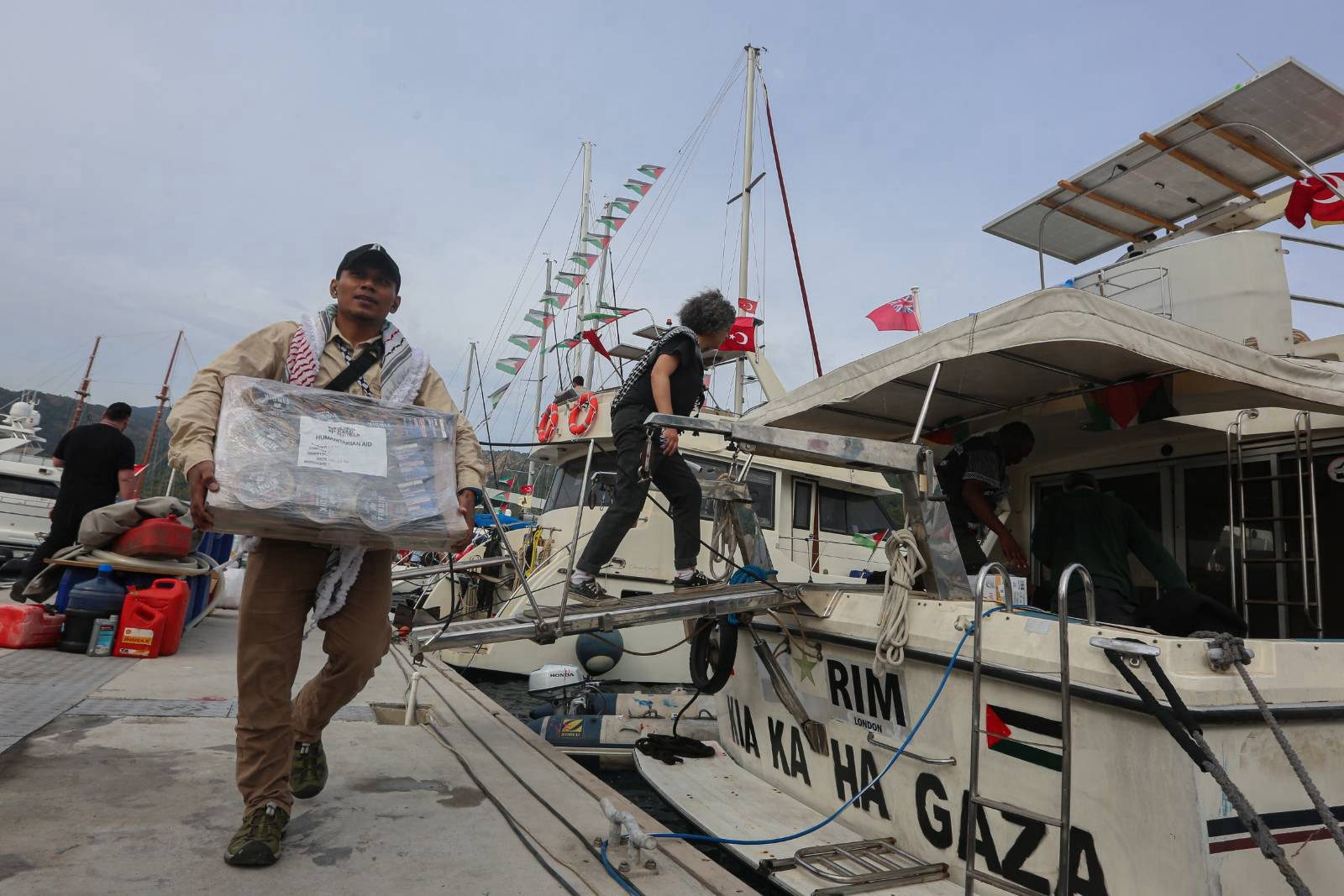
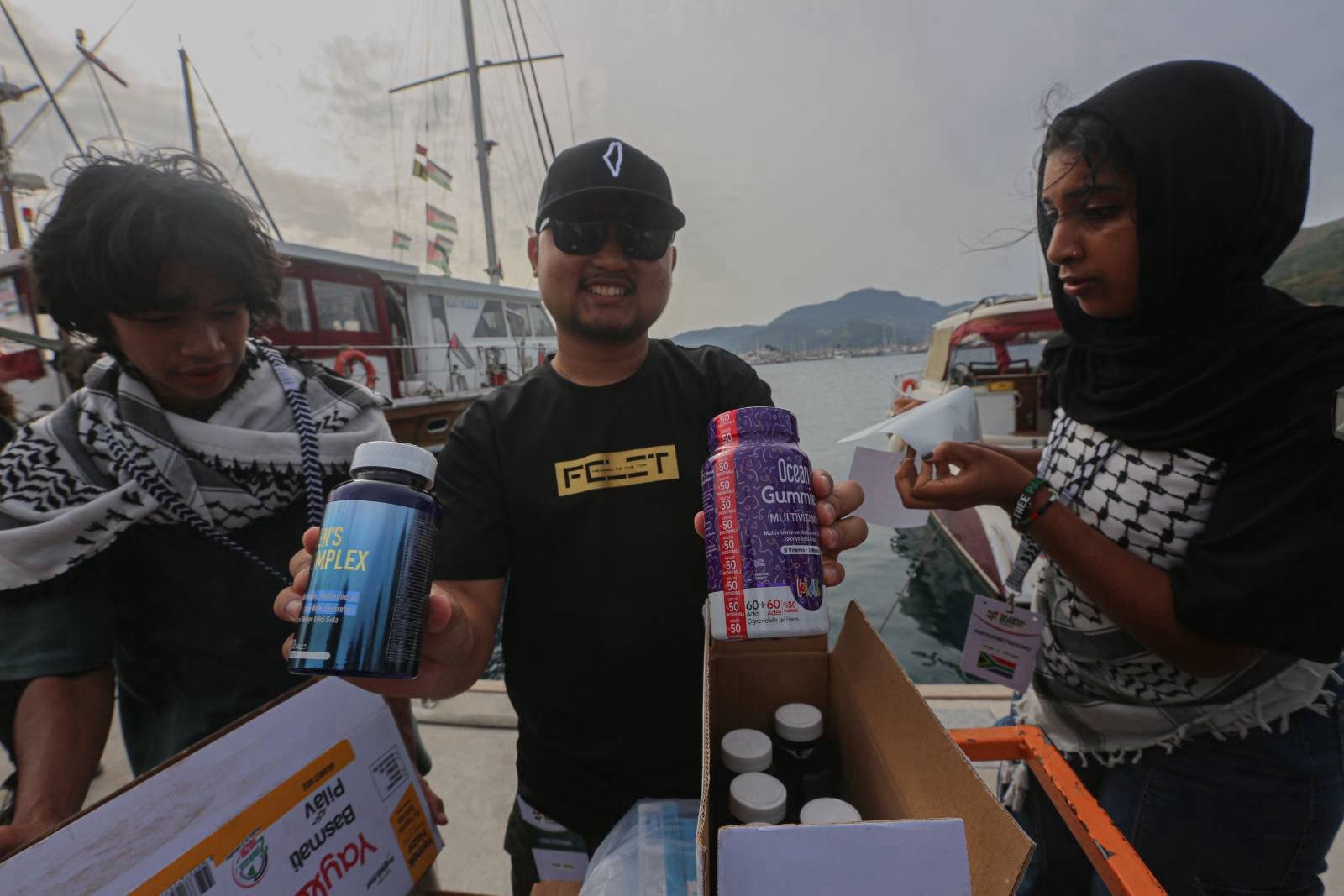
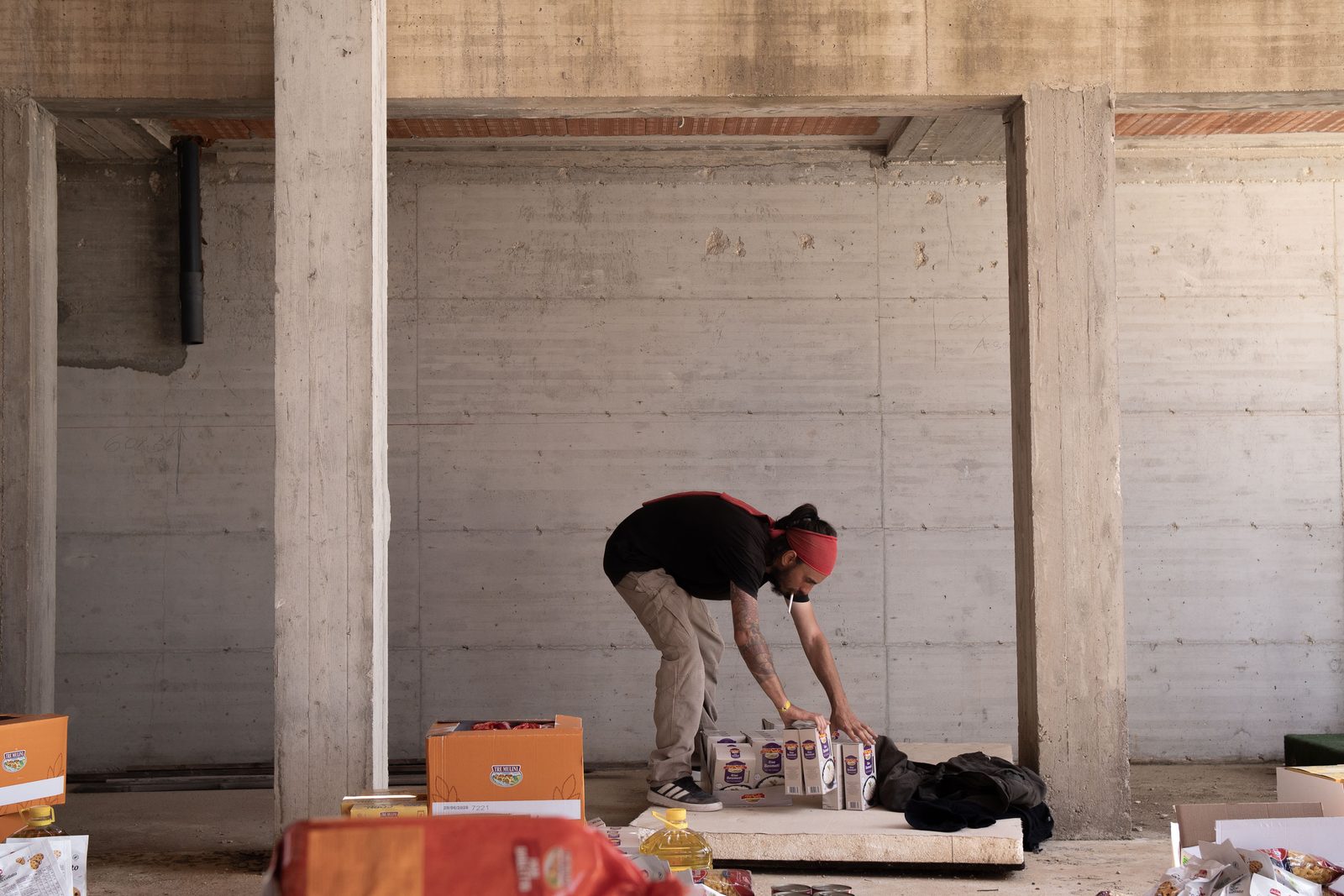
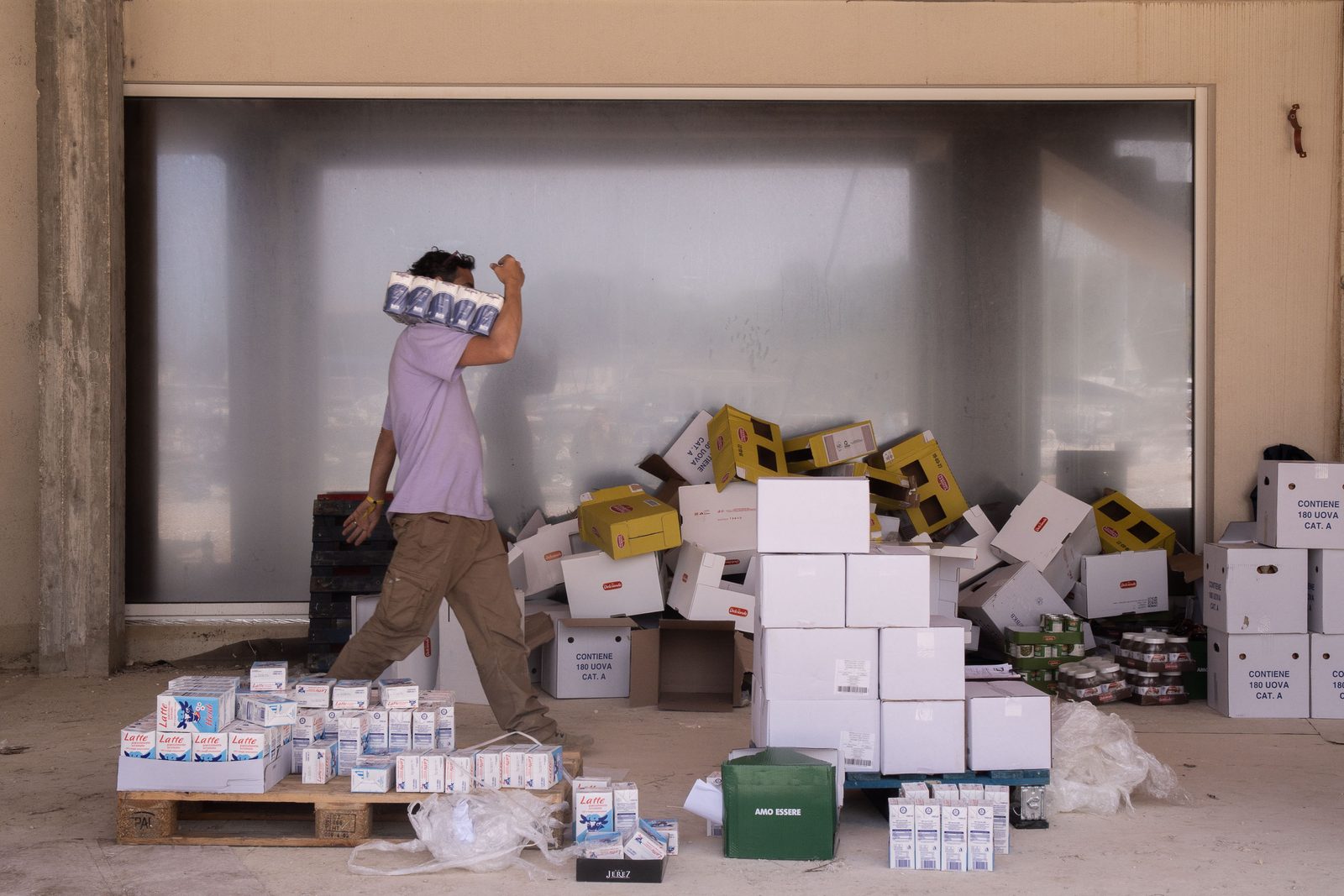
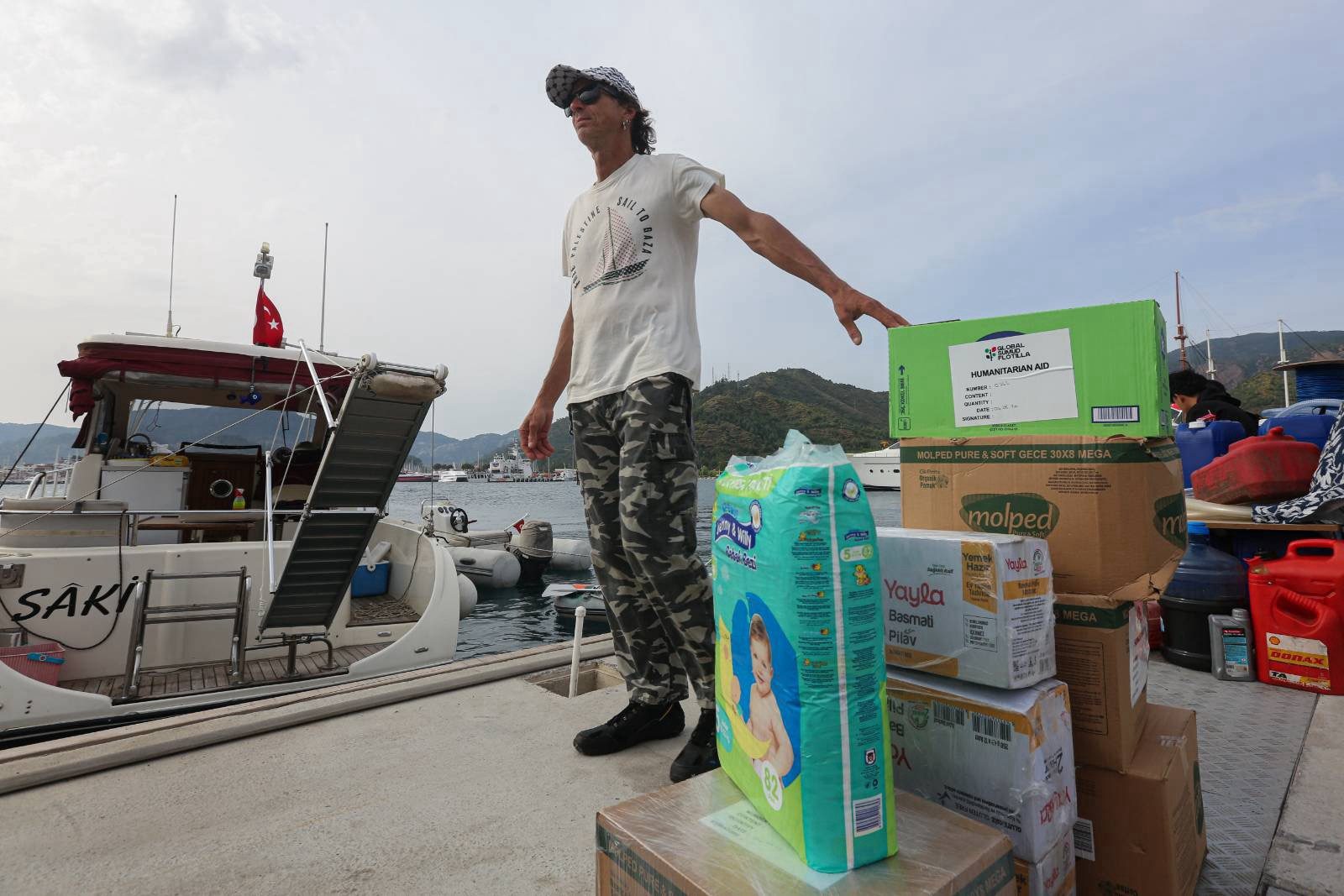
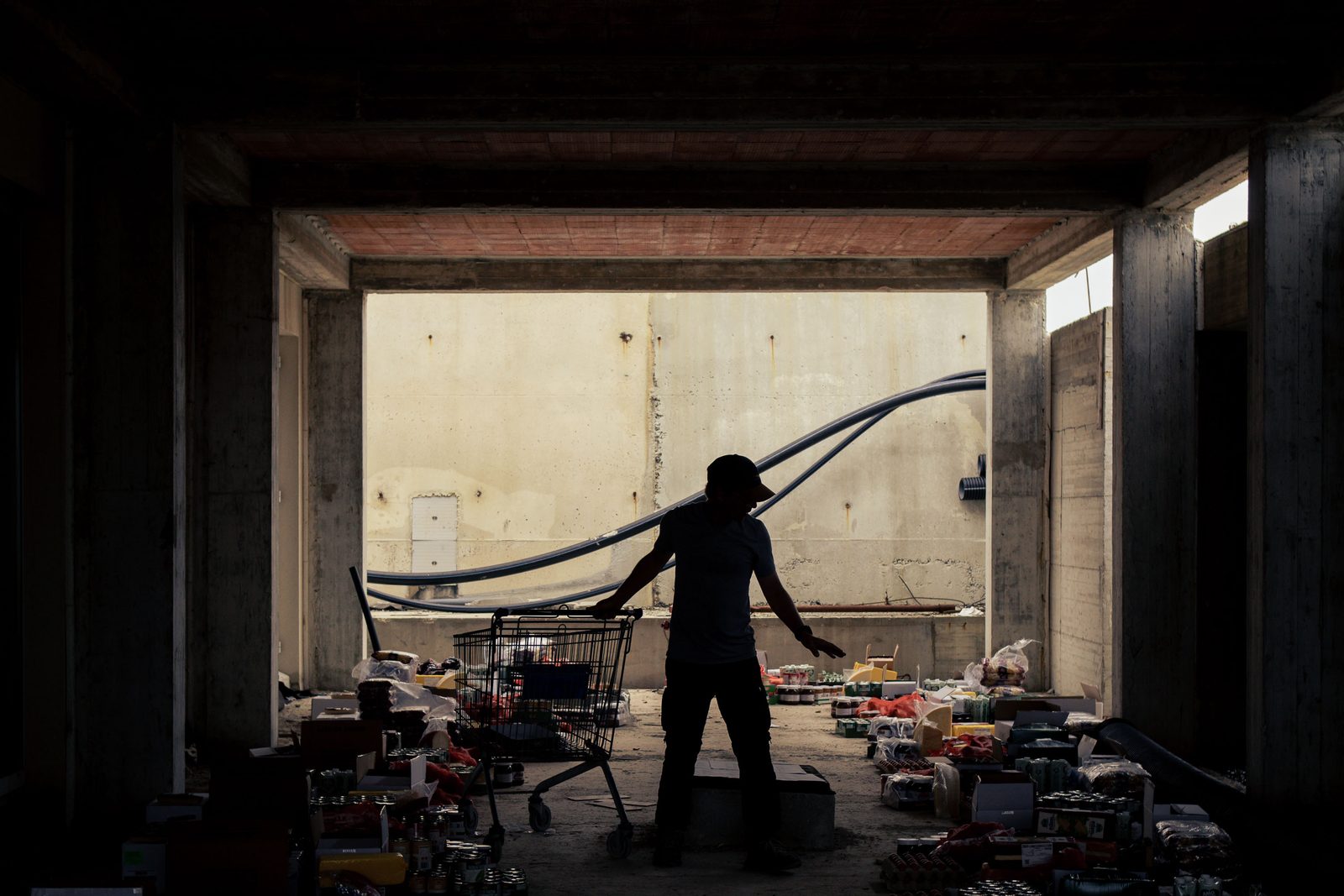
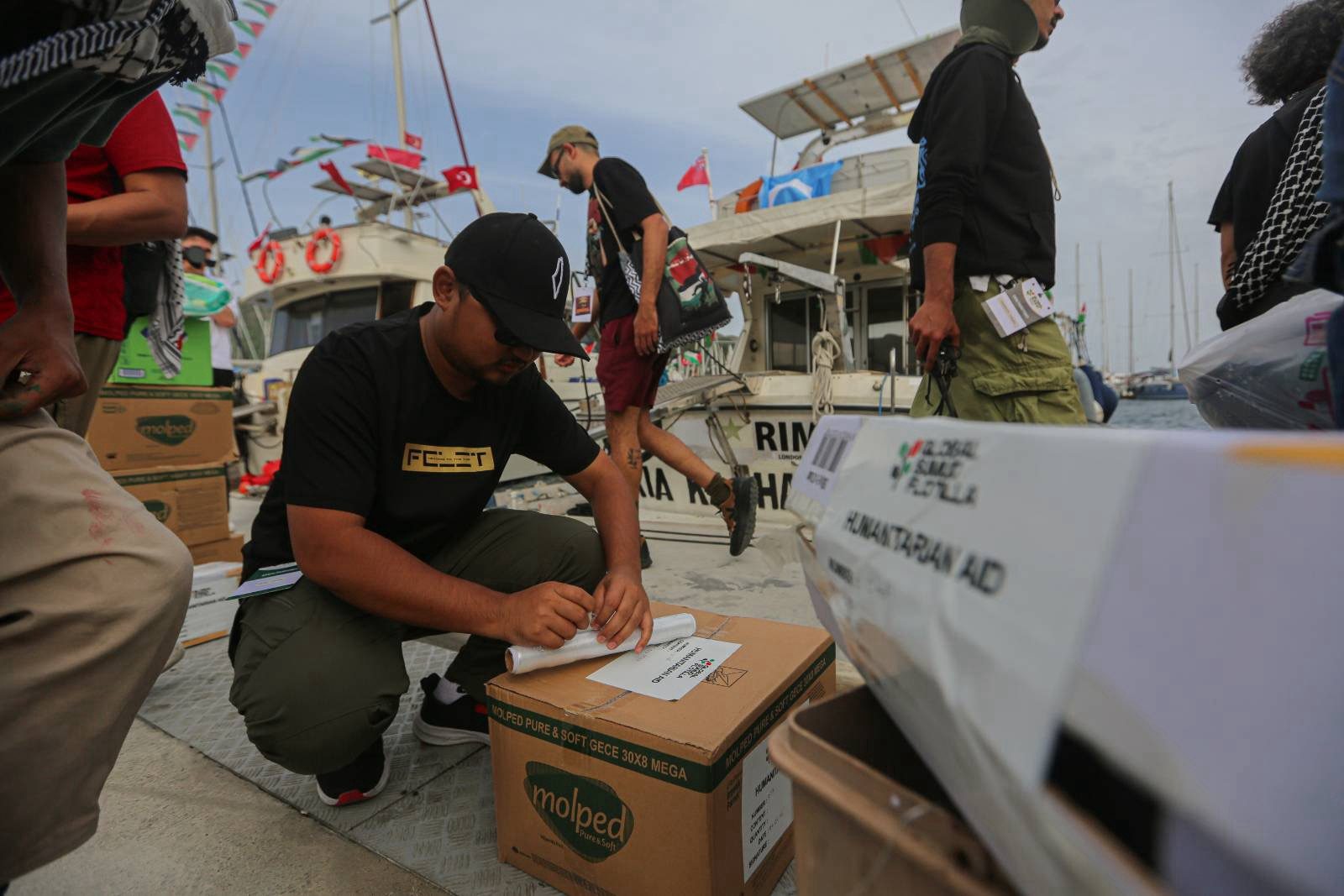
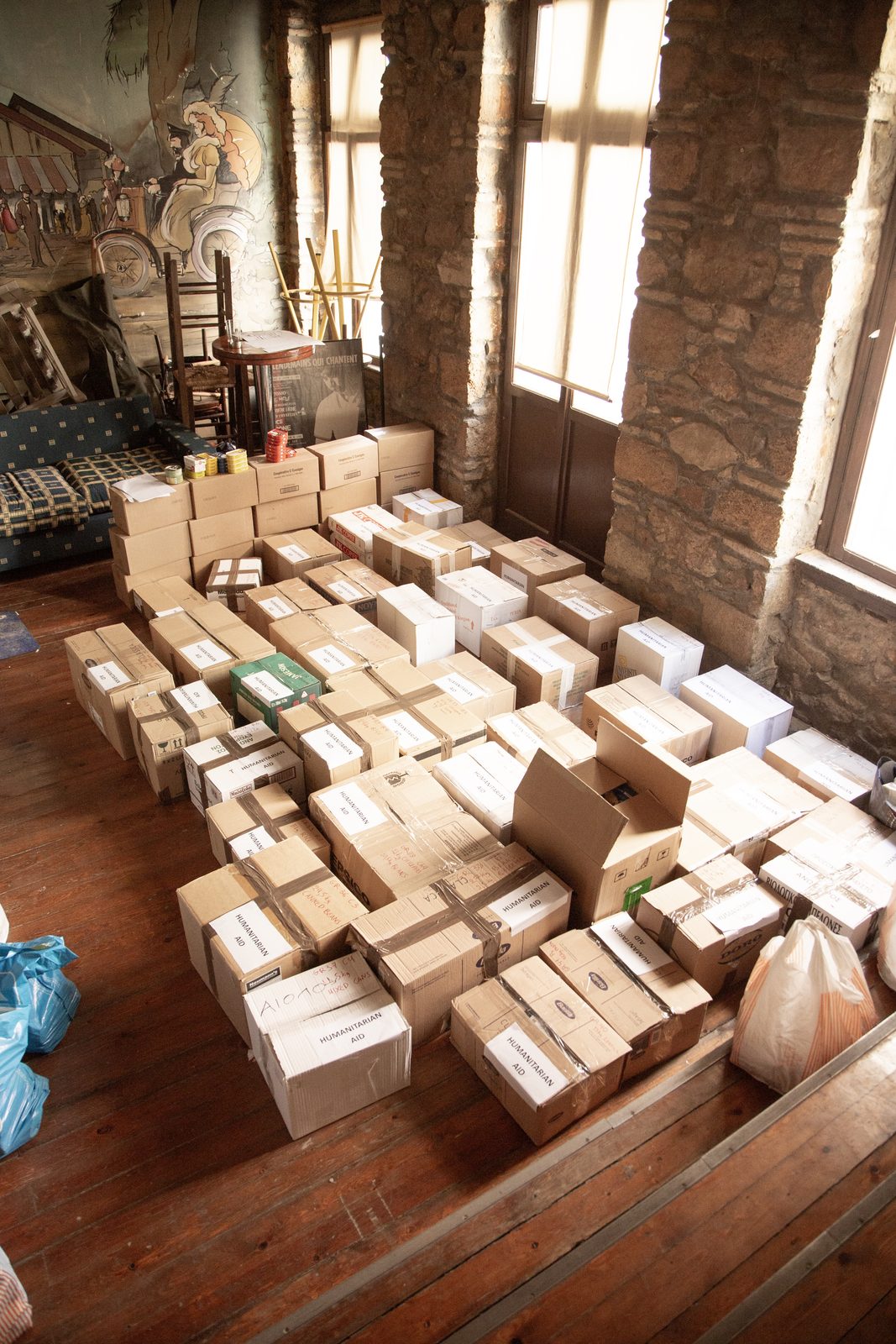
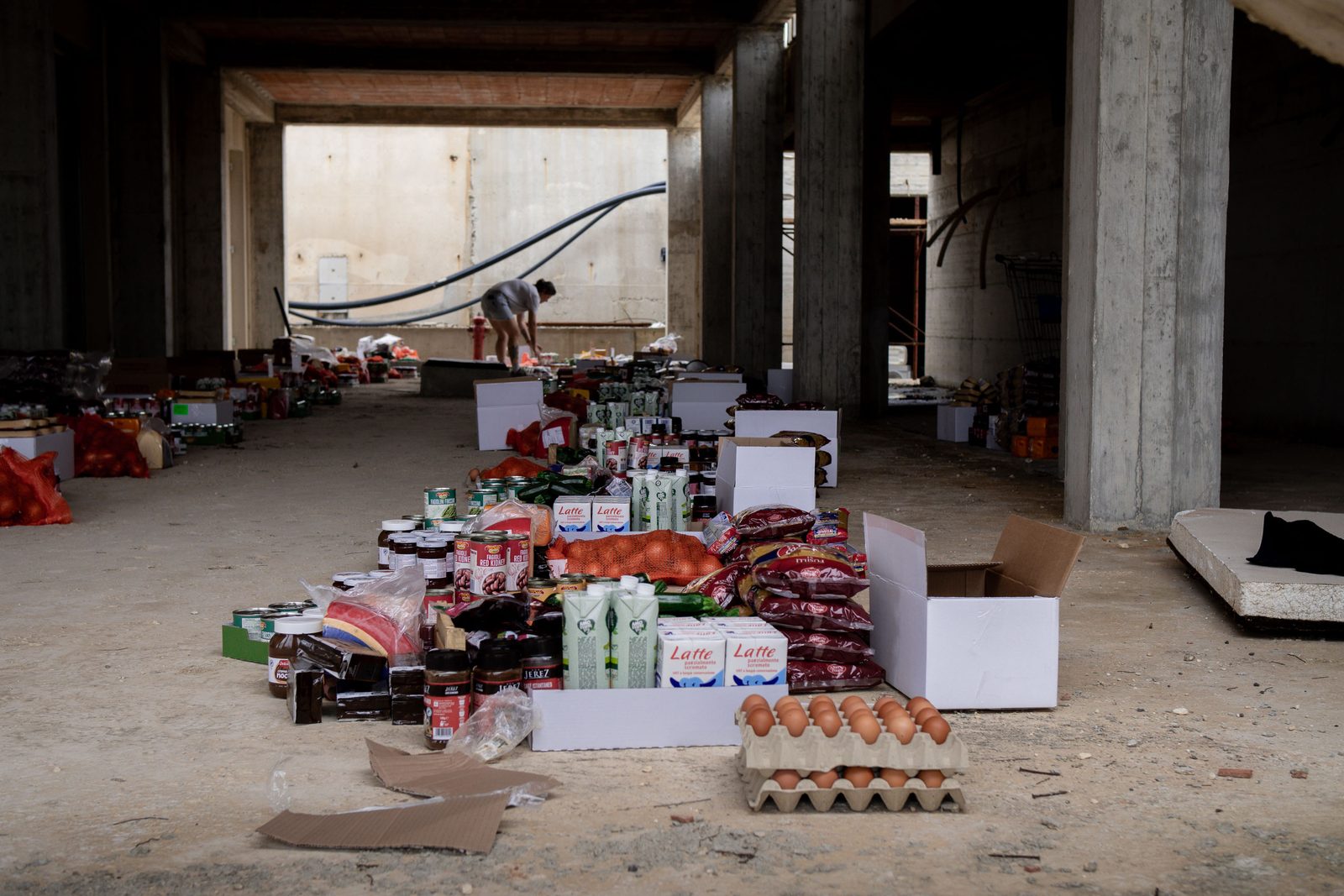
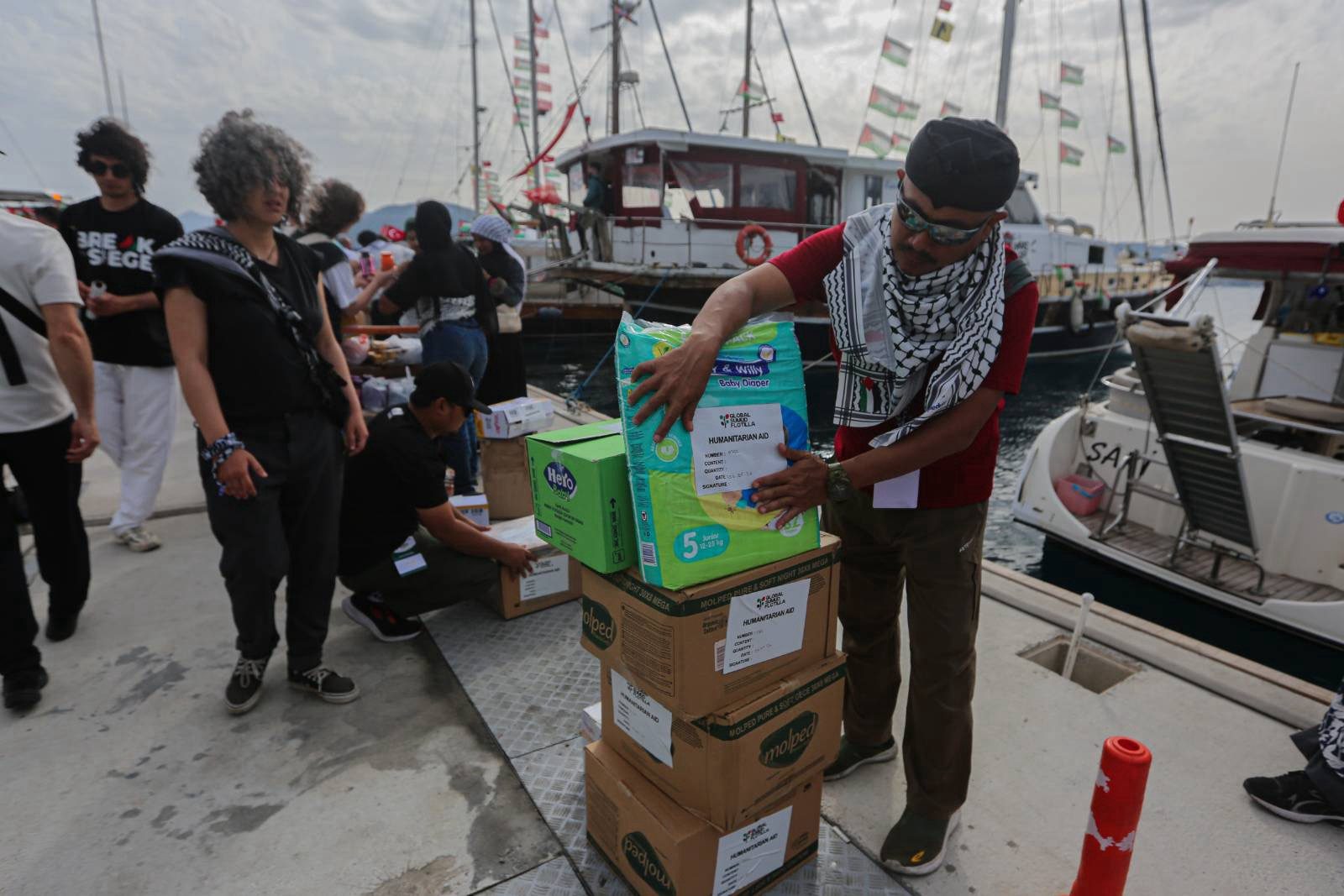
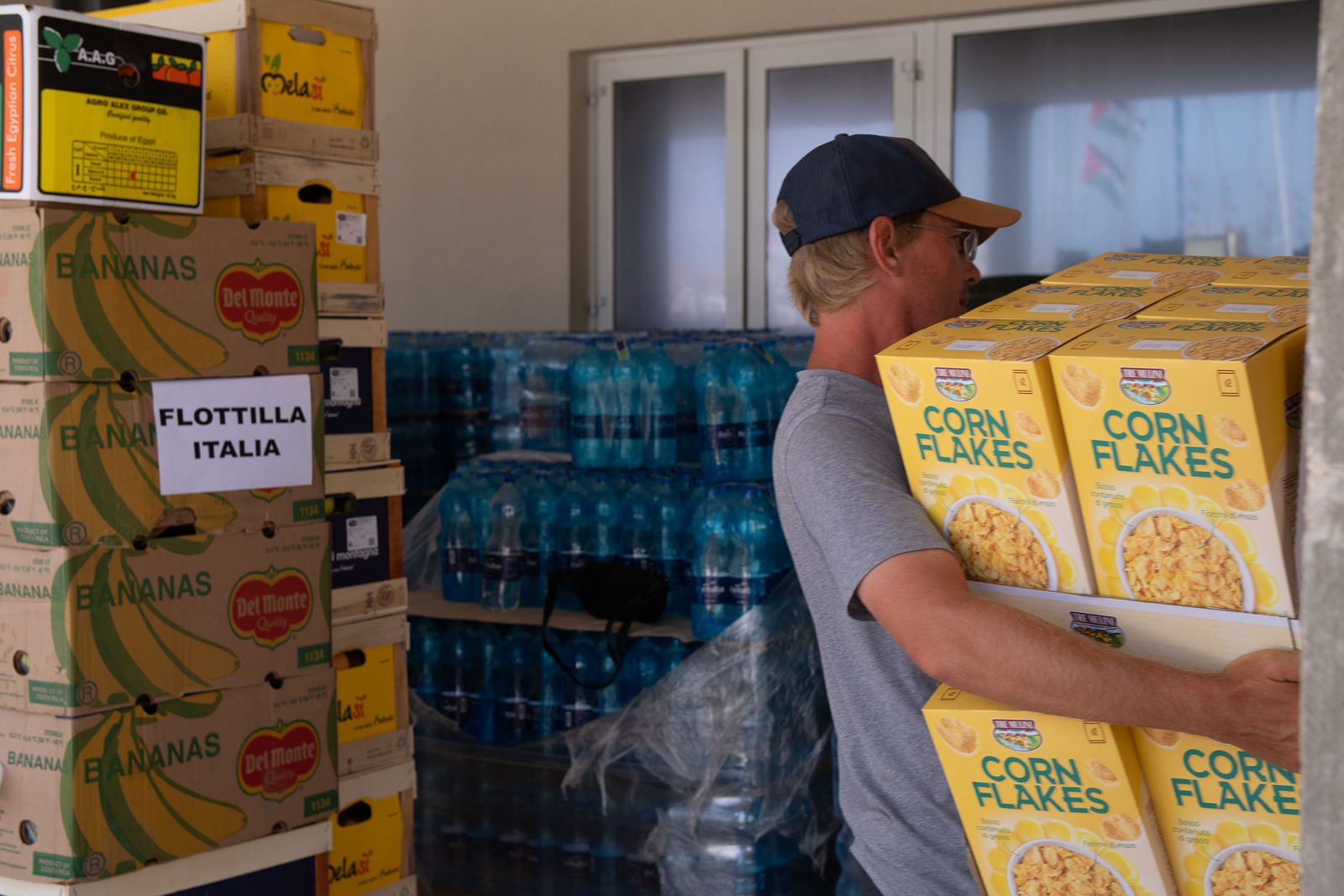
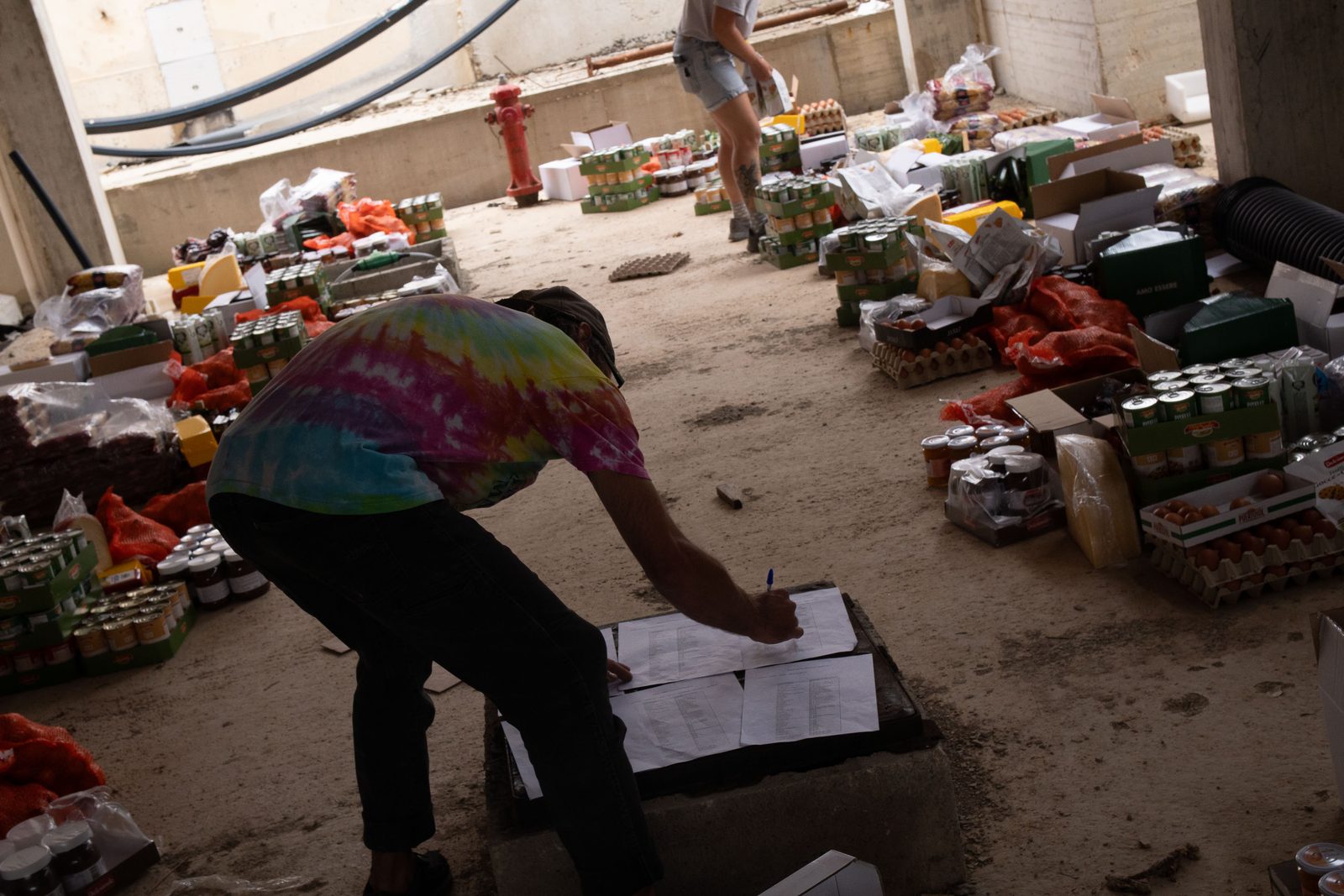
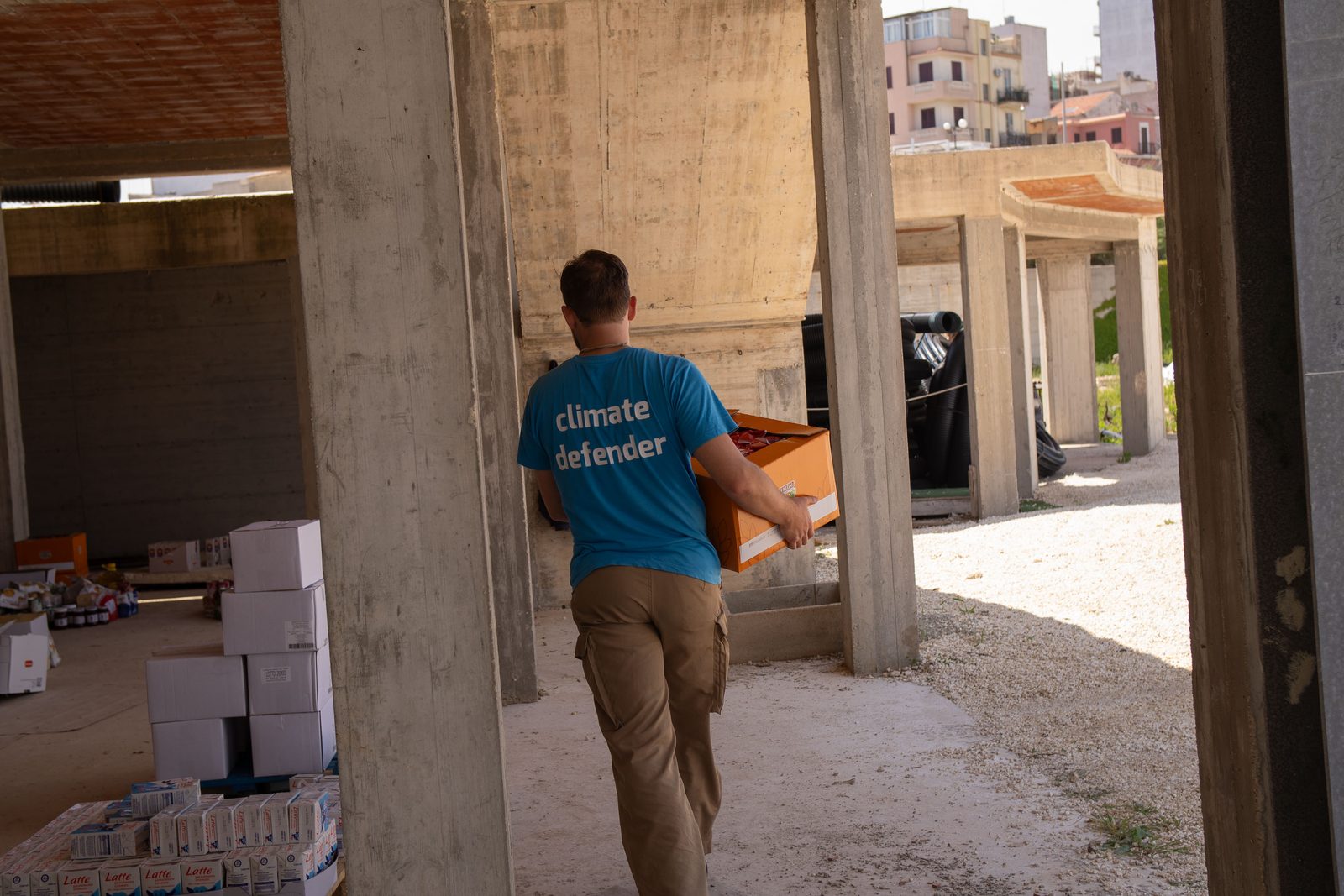
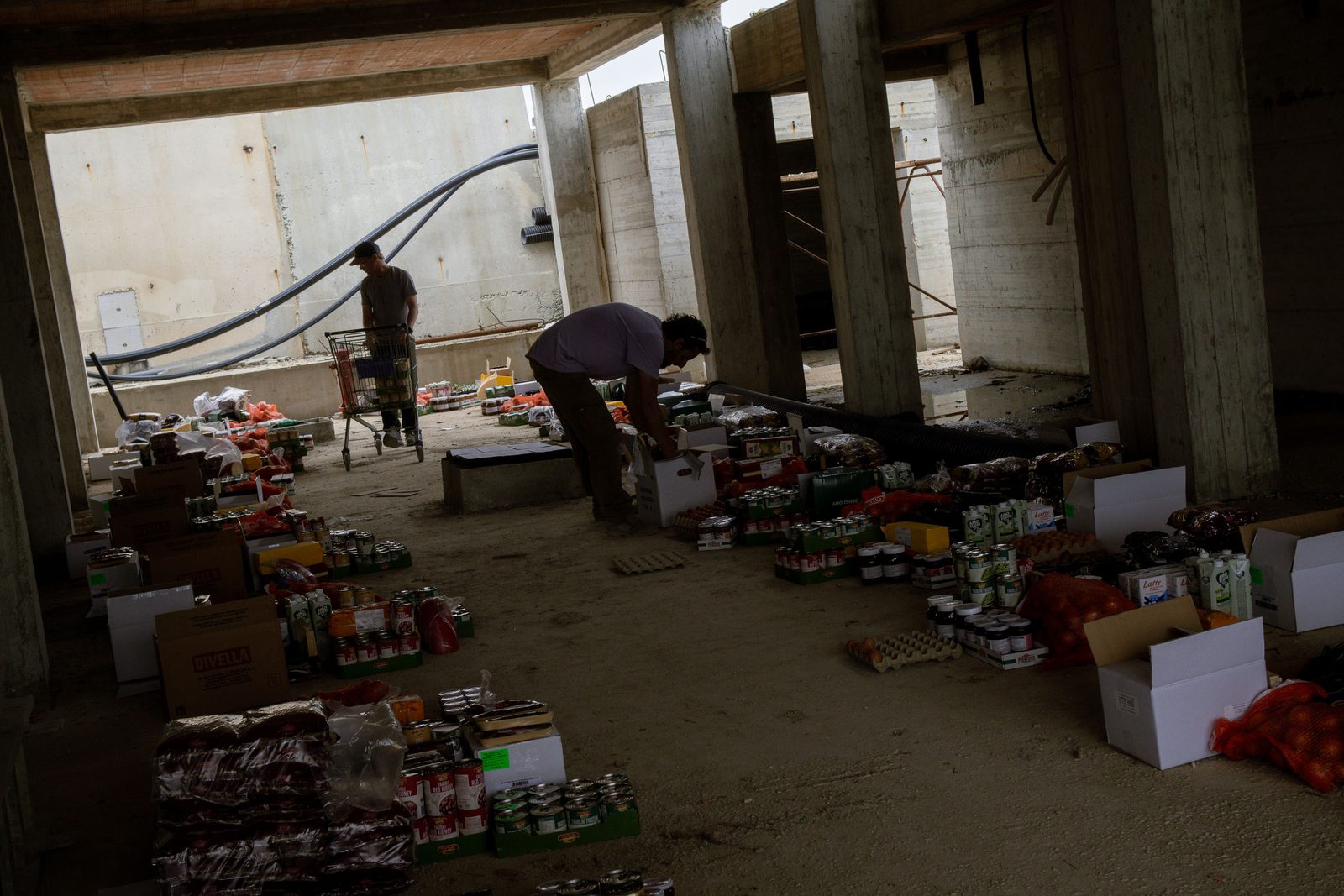
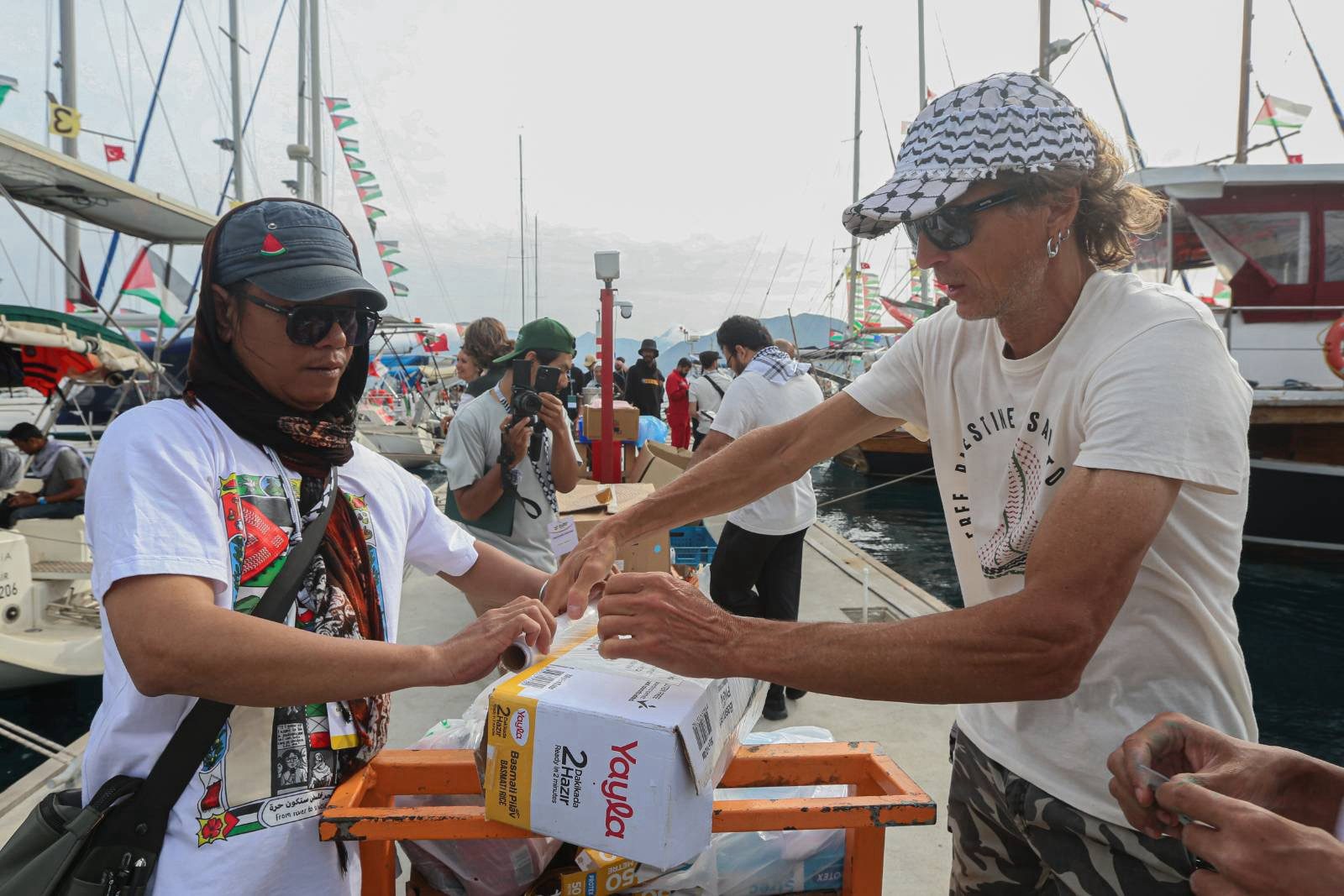
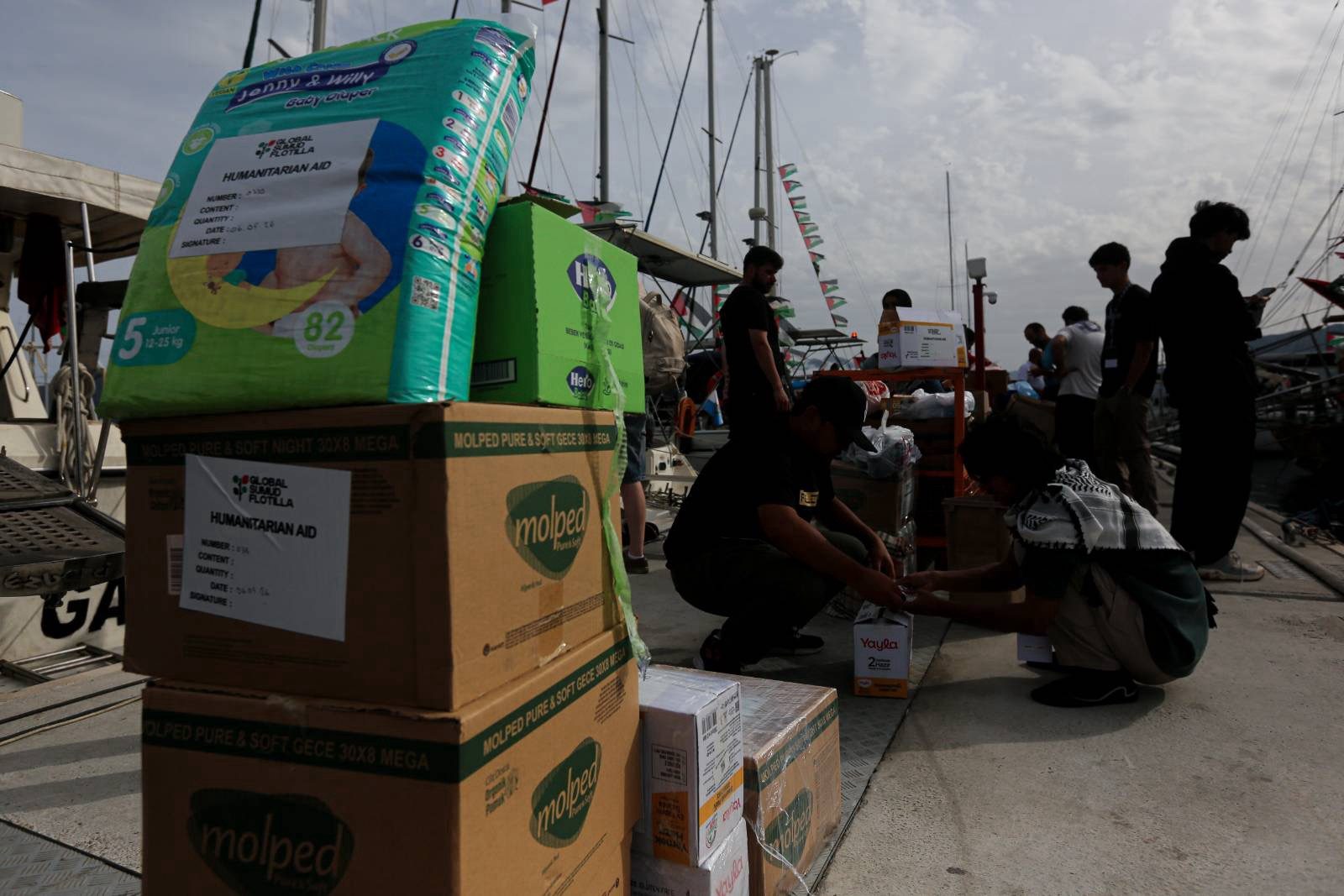
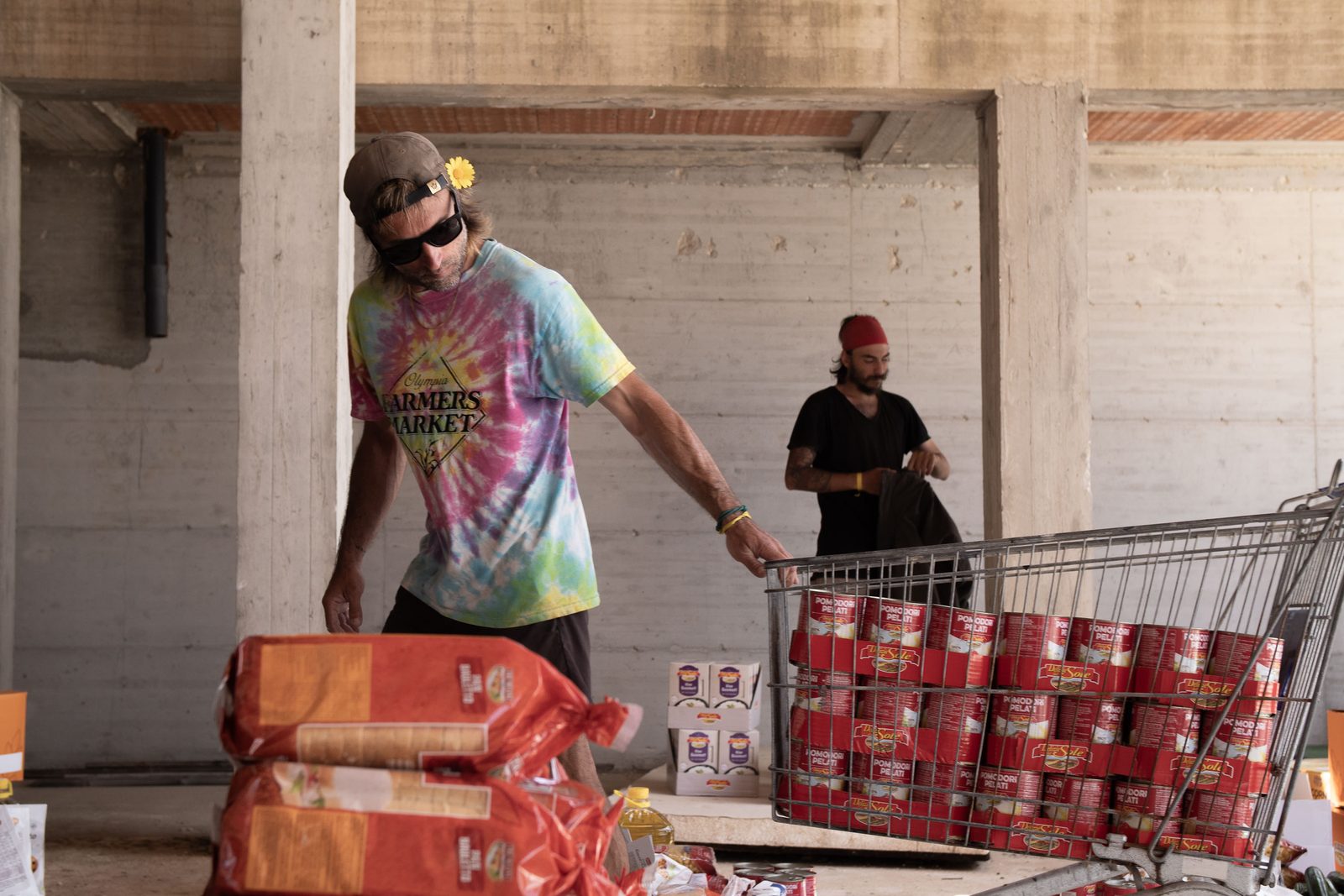
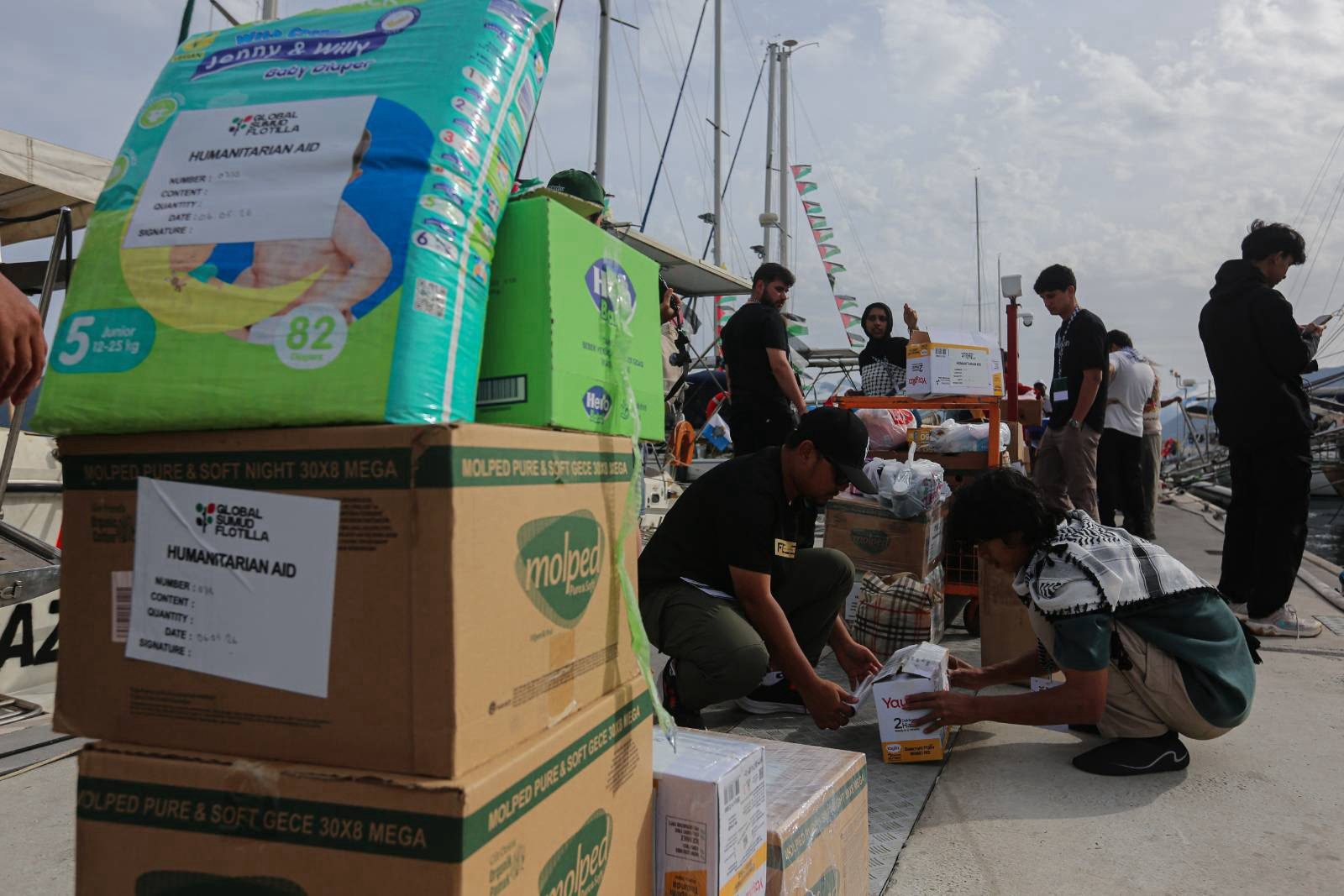
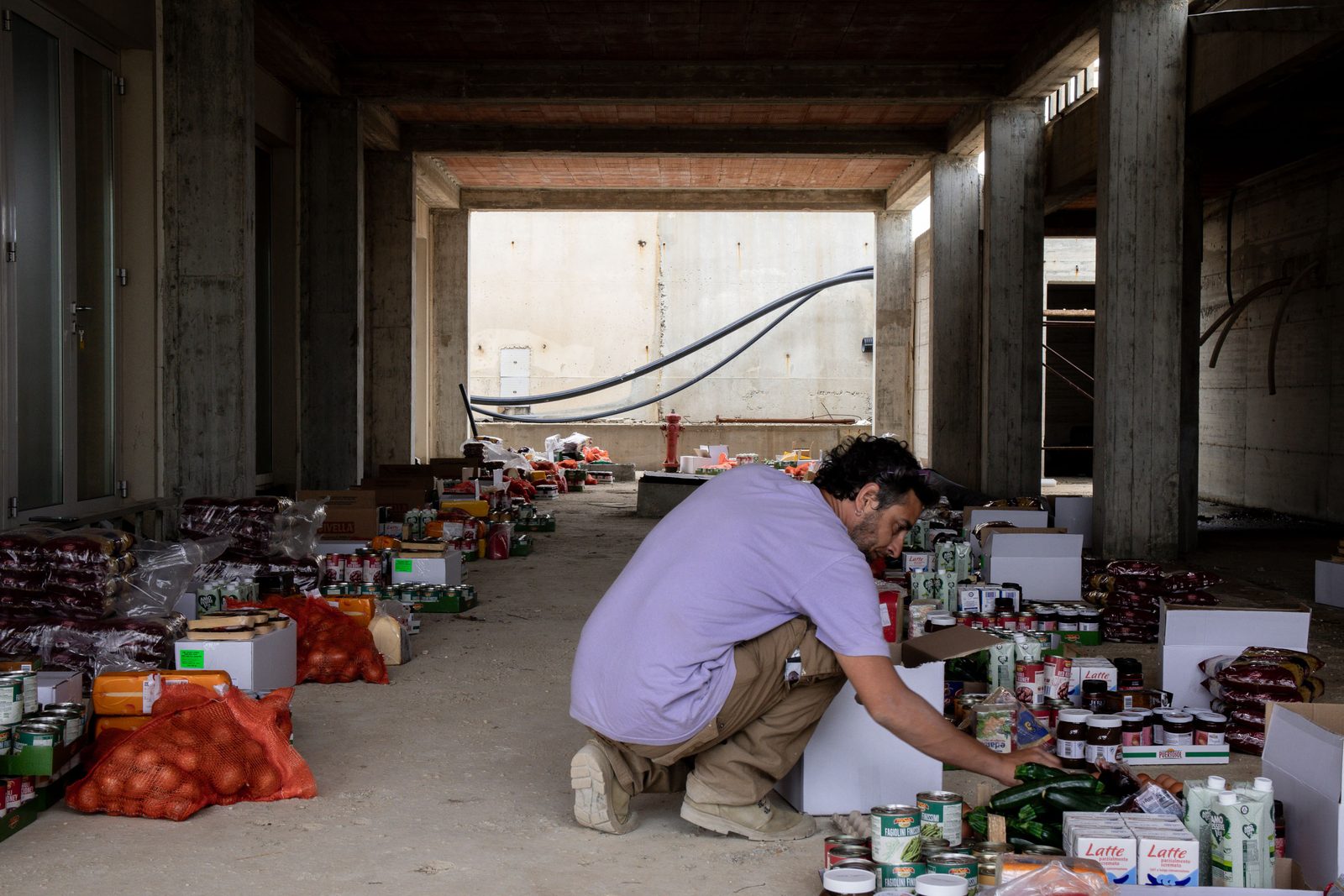
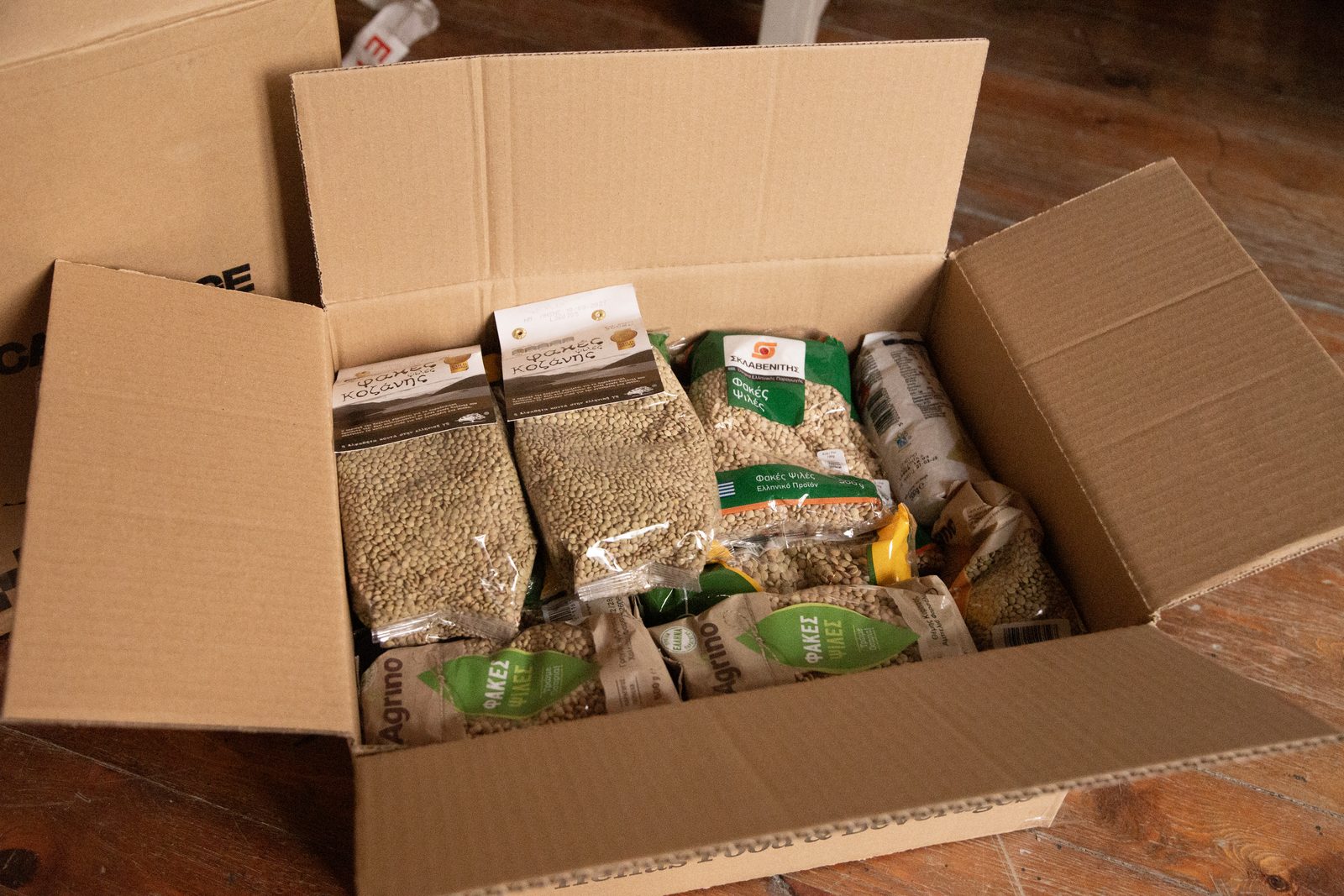
By the end of 19 May, and after more than 30 hours of illegal interceptions, all fifty vessels had been seized. 429 participants from 45 countries were aboard two prison ships, en route to Ashdod port in occupied Palestine. The flotilla had been carrying over 11,000 kilograms of verified humanitarian aid: rice, legumes, infant formula, baby care, medical supplies, water purification tablets, hygiene products, relief that families in Gaza had been systematically denied for nineteen months.
This was no longer a humanitarian or international incident. It was a war crime committed in international waters, in the SAR zones of two European-adjacent states, against an unarmed civilian mission operating under international law. The Foreign Ministers of Türkiye, Bangladesh, Brazil, Colombia, Indonesia, Jordan, Libya, Maldives, Pakistan, and Spain issued a joint declaration condemning it as a flagrant violation of international and humanitarian law. Türkiye formally characterised the interception as an act of piracy under UNCLOS Article 101.