Izwe lethu/The land is ours: Remembering the Sharpeville Massacre
The Sharpeville Massacre stands as a defining moment in the history of people power.
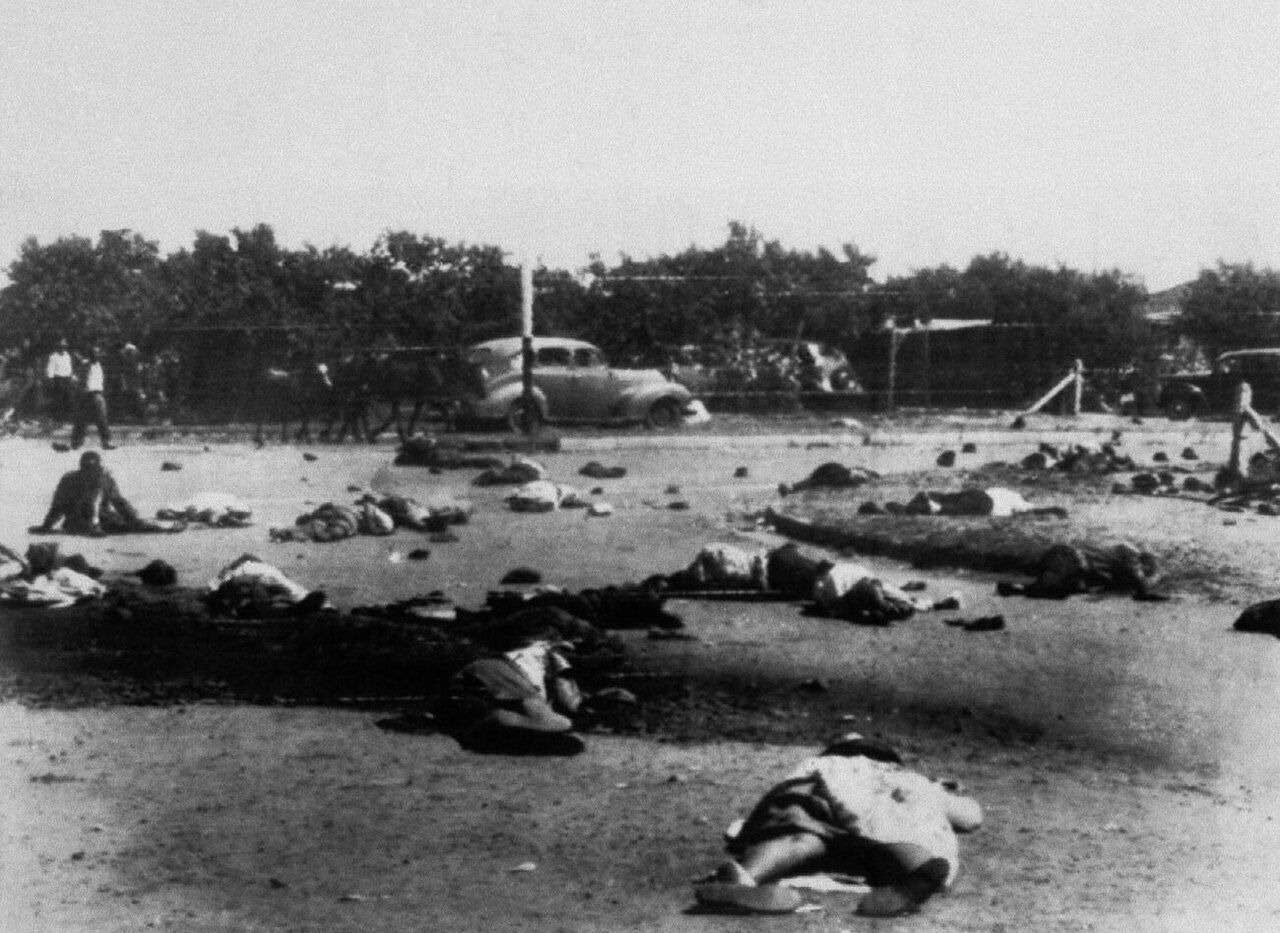
On 21 March 1960, the Pan Africanist Congress (PAC) organised thousands of unarmed Black South Africans in a peaceful protest against the “pass laws” that controlled their lives and denied their humanity. The pass laws forced Black South Africans to carry special identification that could be checked by authorities at any time. The laws were used to restrict where Black people could live, work or travel, at the same time ensuring the expansion of whites-only areas. The pass laws were used to arrest and imprison thousands of people under Apartheid. The protesters’ plan was to march to the Sharpeville police station without their passes in an act of civil disobedience. What unfolded was a brutal act of state violence, where police opened fire at close range on a crowd of protesters who were singing and dancing while demanding dignity through their collective presence. Reports on the incident stated that more than 700 bullets were fired into the crowd resulting in official reports of 69 people being killed and nearly 200 people injured. Many people were shot in the back fleeing the police violence. More recent research into police archives has put these numbers much higher as South African police attempted to cover up their violence. Sharpeville revealed the truth of apartheid to the world, but more importantly, it demonstrated that ordinary people, when united, have the capacity to challenge the systems designed to silence them. In the days that followed, demonstrations against the killings spread across South Africa and the world. The leadership of the African National Congress (ANC), including Nelson Mandela also burned their passes in solidarity with the people of Sharpeville. As protests spread across the world, the United Nations Security Council and General Assembly for the first time condemned the killings and called for an end to Apartheid. Central to this moment in Sharpeville was the protest slogan ‘Izwe lethu’ (the land is ours). It was not just a chant against the injustice of pass laws, but a declaration of ancestral belonging and a refusal of the dispossession forced upon Black people. In those words, live the collective memory of land, identity, and sovereignty that Apartheid sought to erase. “Izwe lethu” carried the power of people speaking together, asserting that their connection to land could not be legislated away. It transformed protest into something deeper than resistance to injustice. It became a reclamation of the truth. The resonance of this call is felt in the Palestinian struggle, where the question of land remains at the heart of resistance. The cry of ‘from the river to the sea’ captures the deep, personal ties of Palestinian people to their land. It is a historic slogan that has attracted controversy in recent years with Zionist claims that it is antisemitic. Yet, the slogan reaffirms the Palestinian right to a homeland; it reclaims the truth (Palestine did exist) that Israel seeks to erase. Like ‘Izwe Lethu’ the assertion of belonging heard in ‘from the river to the sea’ is both political and deeply personal. It speaks to history, ancestry and sovereignty, and to an unbroken relationship with place despite the ongoing dispossession. The connection between the South African and Palestinian struggles is not symbolic. It is grounded in a shared experience of apartheid systems that seek to control movement, fragment communities, and deny people their right to exist fully on their own land. Israel keeps Palestinians separated into distinct territorial, legal, and administrative preventing the development of a unified Palestinian society and restricting movement between these areas. The discriminatory allocation of resources, including water and development budgets is another example of how apartheid is evident even within Israel. The grab for land in the West Bank and Gaza, the best land with the most valuable resources, is at the heart of what apartheid South Africa was about. While talk of the ‘greater Israel’ has always existed, it is now being openly called for by the right in Israel. Based on the belief that the Bible promised that land to Israel, it has the support of some of the religious right in the US even though ‘greater israel’ encompasses all or part of Egypt, Iraq, Jordan, Lebanon, Saudi Arabia and Syria.
Sharpeville reminds us that people power is rooted in our ability to fearlessly stand together in that truth to oppose those in power who are seeking to silence Palestinians and their supporters today. On March 21, the world now honours the victims of the Sharpeville Massacre on a day known as the International Day for the Elimination of Racial Discrimination. Let’s remember that back in 1960, the Sharpeville protesters forced the world to pay attention to what was happening in South Africa. The Palestinian people of Gaza and the West Bank have been fighting for the recognition of their right to exist and for the world to take action against the apartheid regime of Israel. First Nations peoples are leading this same resistance in many countries around the world. We are also reminded that ‘Izwe lethu’ and ‘from the river to the sea’ endure as more than protest slogans. They remind us of how systemic racism is rooted in the rich and powerful to control the land and resources. They are a living expression of how collective resistance that continues to echo across many struggles for land justice around the world can change history.